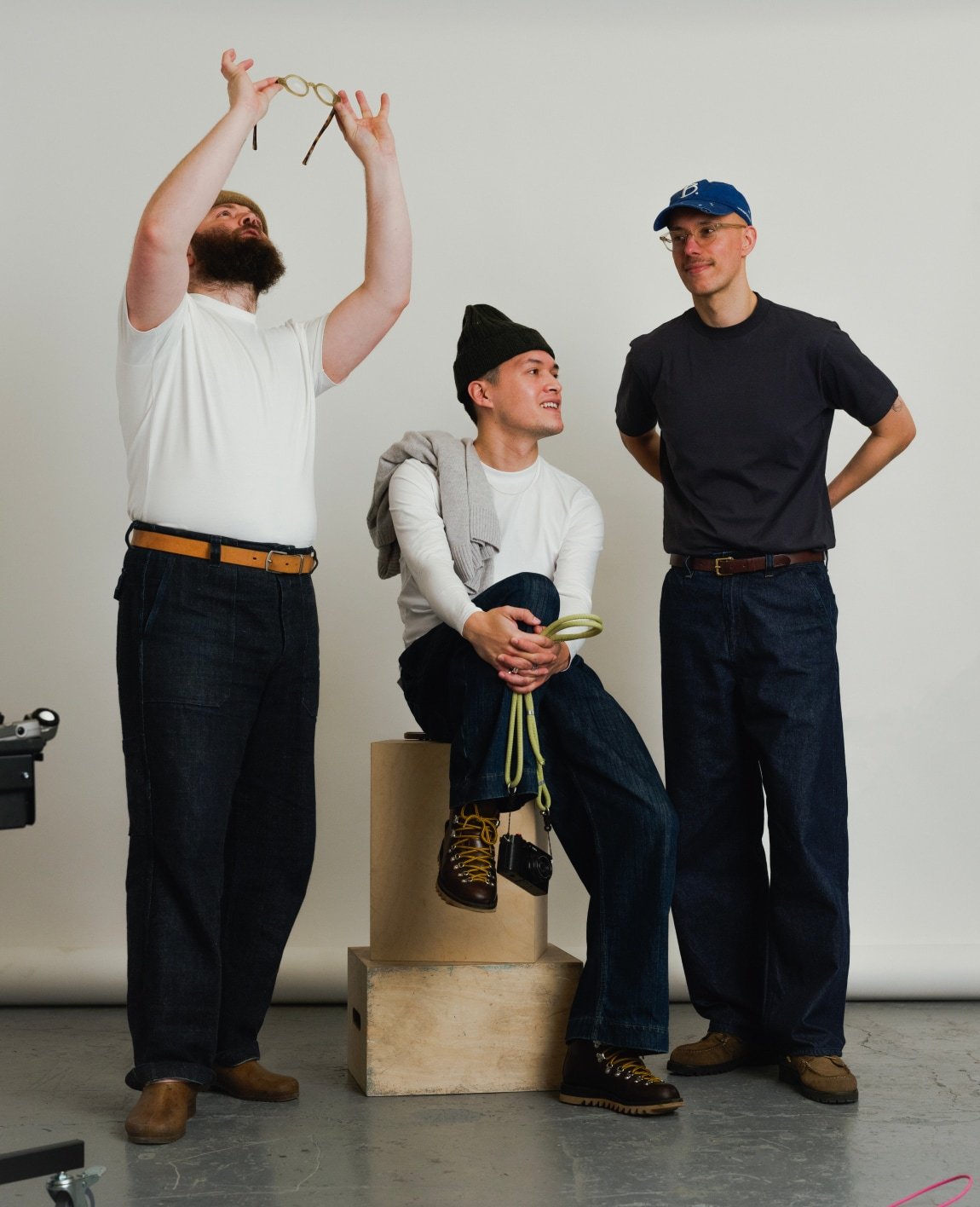
Behind our SS26 shoot at Guest House No. 16
In conversation with Norm Architects founder Jonas Bjerre-Poulsen
SS26 unfolds steeped in the rhythm of summer at home in Denmark. Textured linen, crisp Poplin, soft Merino wool, and smooth Supima cotton, our seasonal collection is presented against the backdrop of Guest House No. 16, Norm Architects founder Jonas Bjerre-Poulsen’s private summer house north of Copenhagen. Here, wood, stone, and lime wash create a tactile connection to the landscape, while the interplay of precise detailing and organic imperfection shapes interiors that are serene yet full of character—complementing the architectural design language and tactile depth of the collection.
We caught up with Jonas to learn more about the way he approached the renovation of this storied home, how simplicity becomes meaningful, and which role Guest House No. 16 plays in his personal experience of Danish summer. Read the interview, accompanied by atmospheric imagery shot by Jonas himself, below.
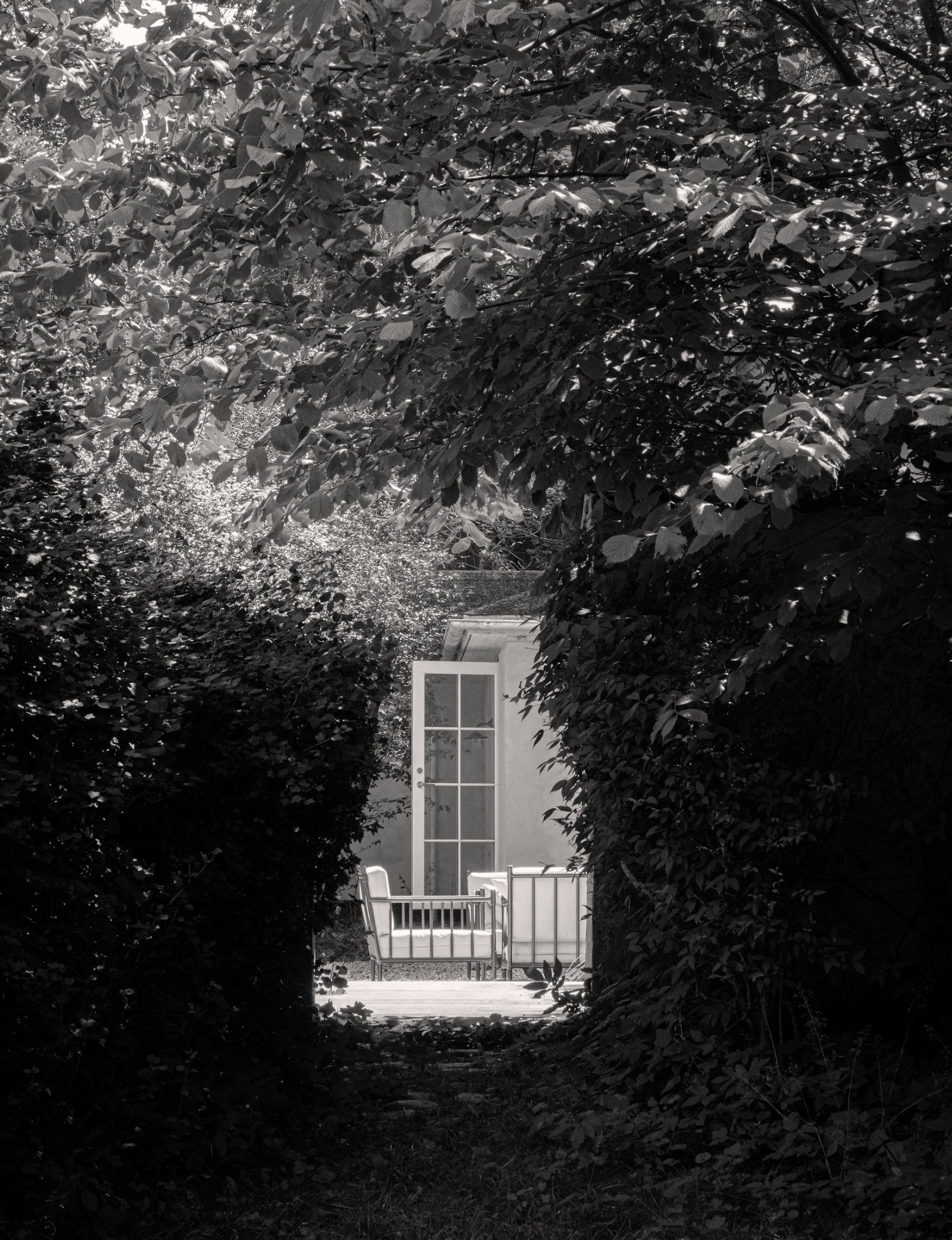
“The vision for No. 16 was to restore not just a house, but a feeling—a quiet, timeless atmosphere rooted in its history as a seaside retreat.”
Can you tell us a bit about the vision you had for the house and the look and feel you aimed to achieve?
The vision for No. 16 was to restore not just a house, but a feeling—a quiet, timeless atmosphere rooted in its history as a seaside retreat in North Zealand for relaxation, entertainment, and well-being.
We approached the renovation holistically, designing everything from architectural elements to furniture and objects, so nothing would feel added on, but rather as if it had always belonged. The aim was to create a sense of understated luxury—where simplicity and refinement coexist naturally.
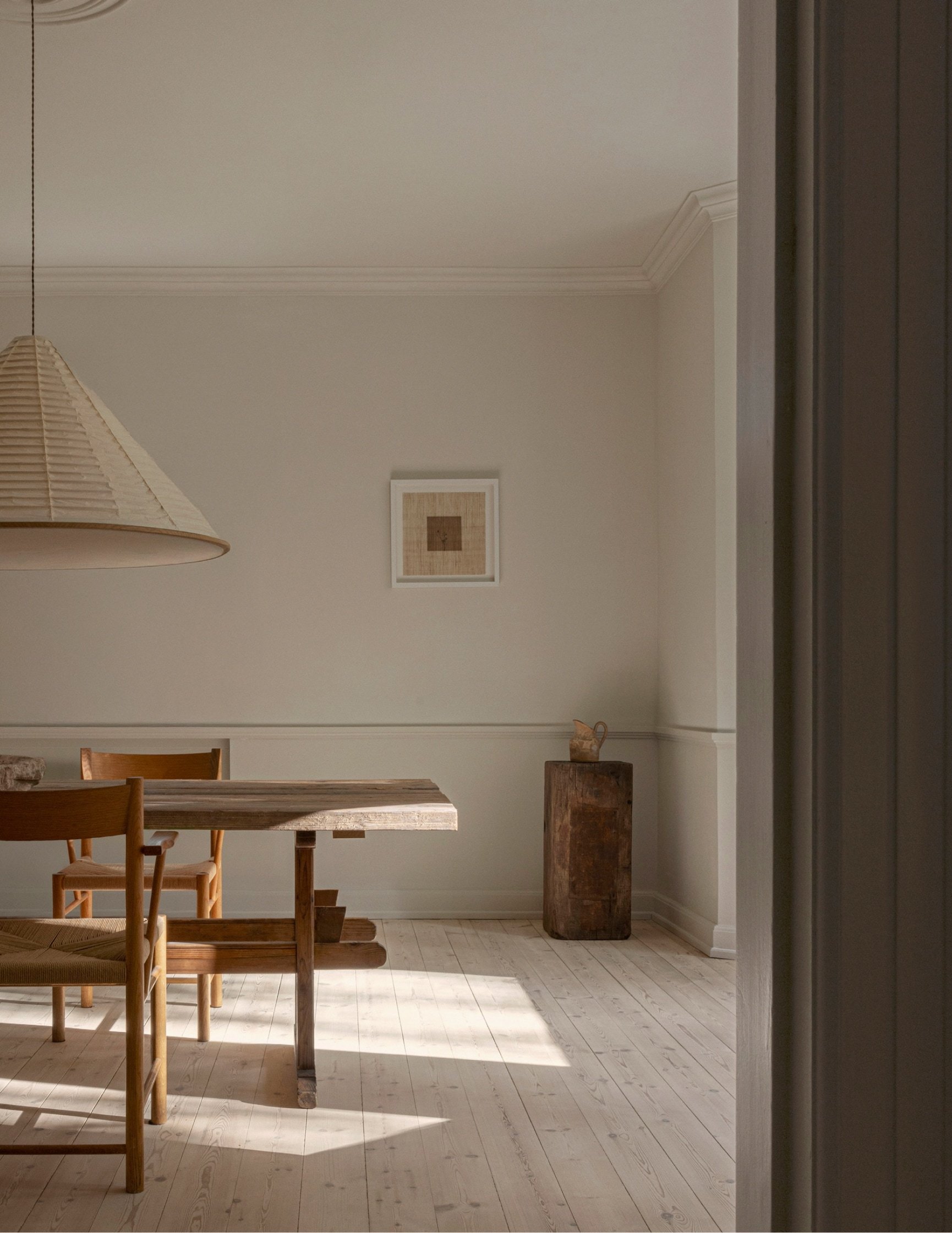
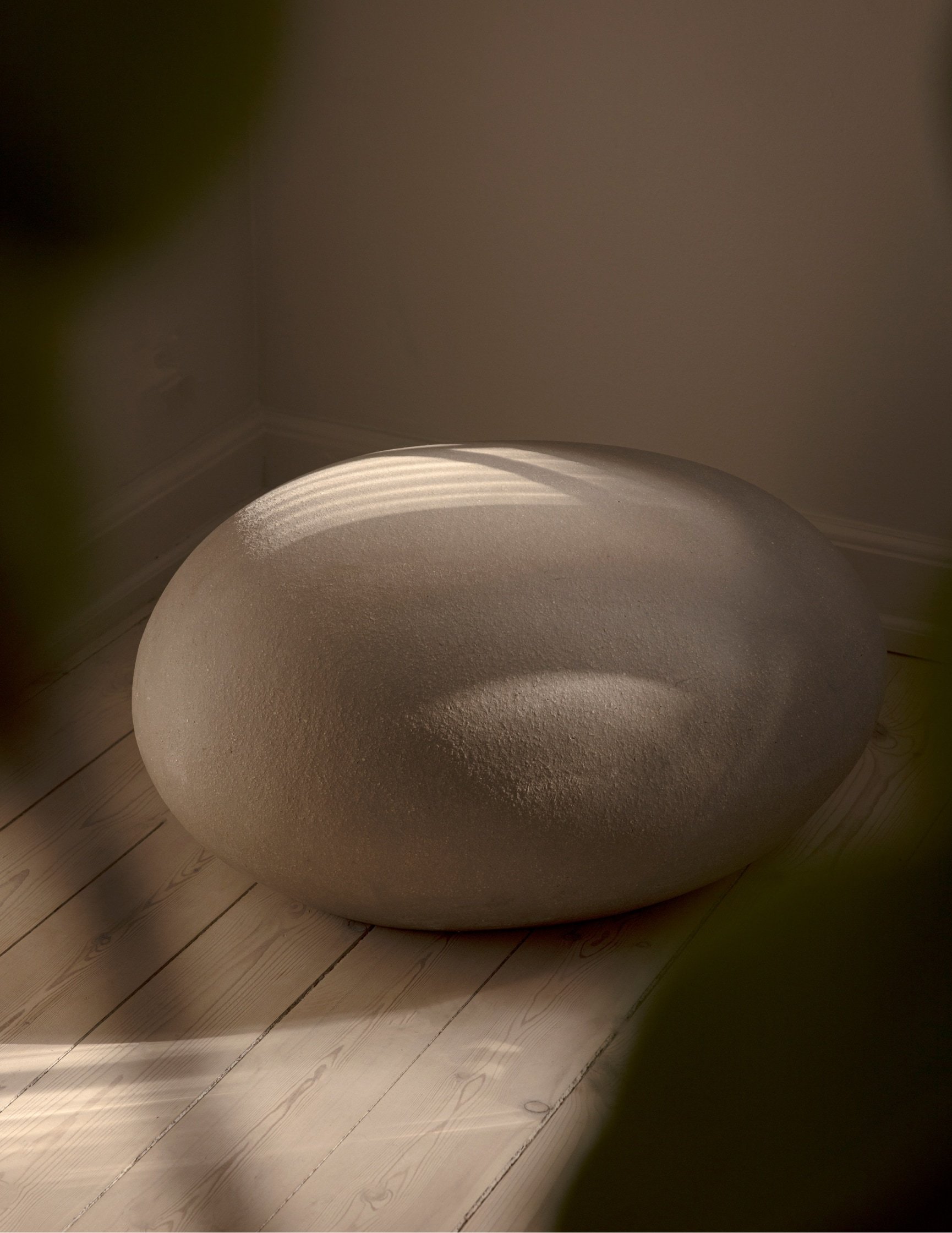
Stylistically, the house balances Italian neoclassical elegance with the clarity of Scandinavian design. This is softened by a rustic Nordic seaside sensibility, grounded in natural materials and everyday functionality. Layered into this is a subtle Japanese influence, embracing imperfection, tactility, and the beauty of time passing as I have spent considerable time working in Japan over the past 10 years.
Together, these references form a quiet dialogue between cultures, rather than a statement of style. We worked carefully with proportion, light, and materiality to create spaces that feel calm, sensory, and deeply human. The interiors are intentionally restrained, allowing texture, craftsmanship, and atmosphere to take the lead. There is a strong connection to nature throughout, both in materials and in how the house opens toward the landscape. The goal was to create a retreat that feels both intimate and generous—simple, yet complete.
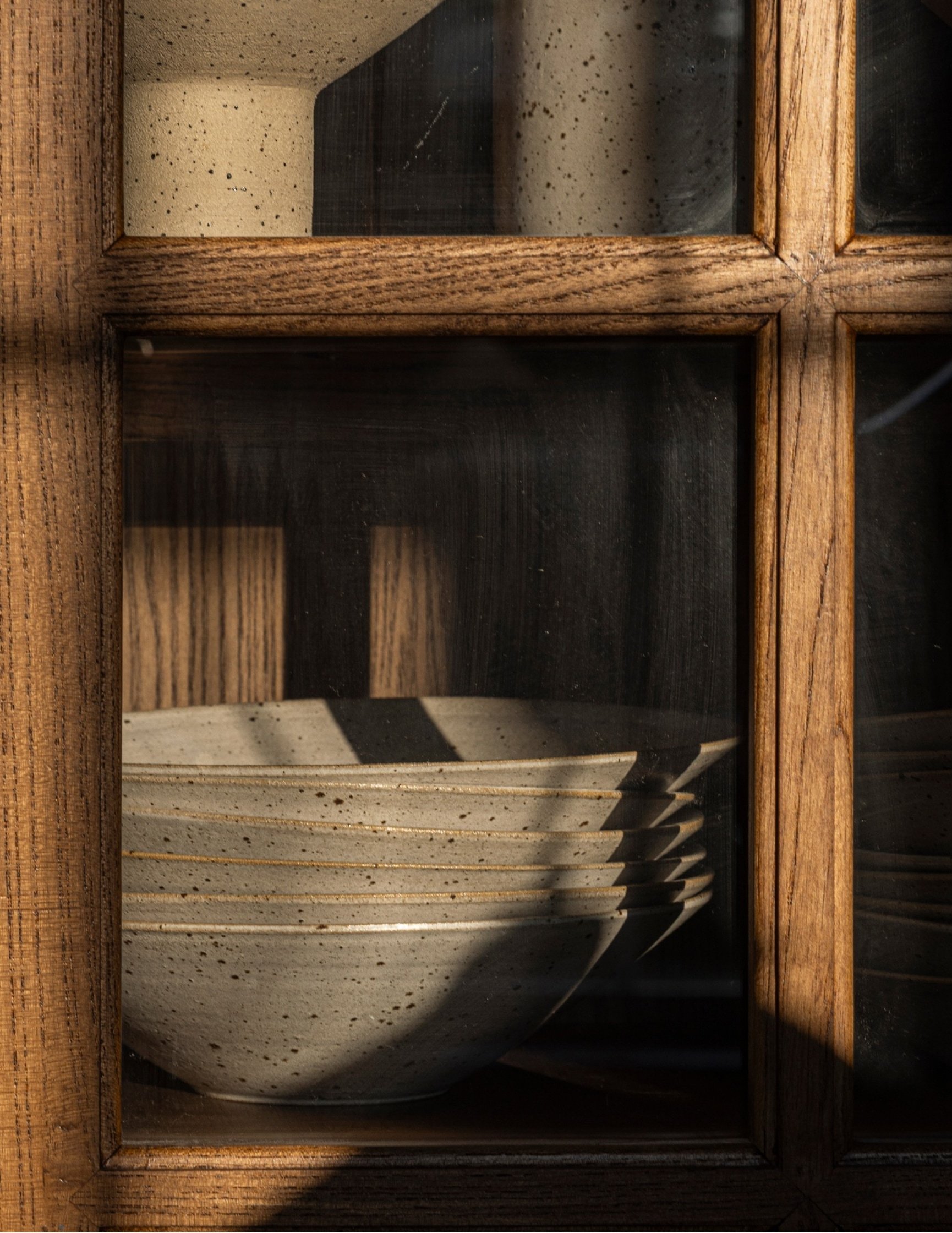
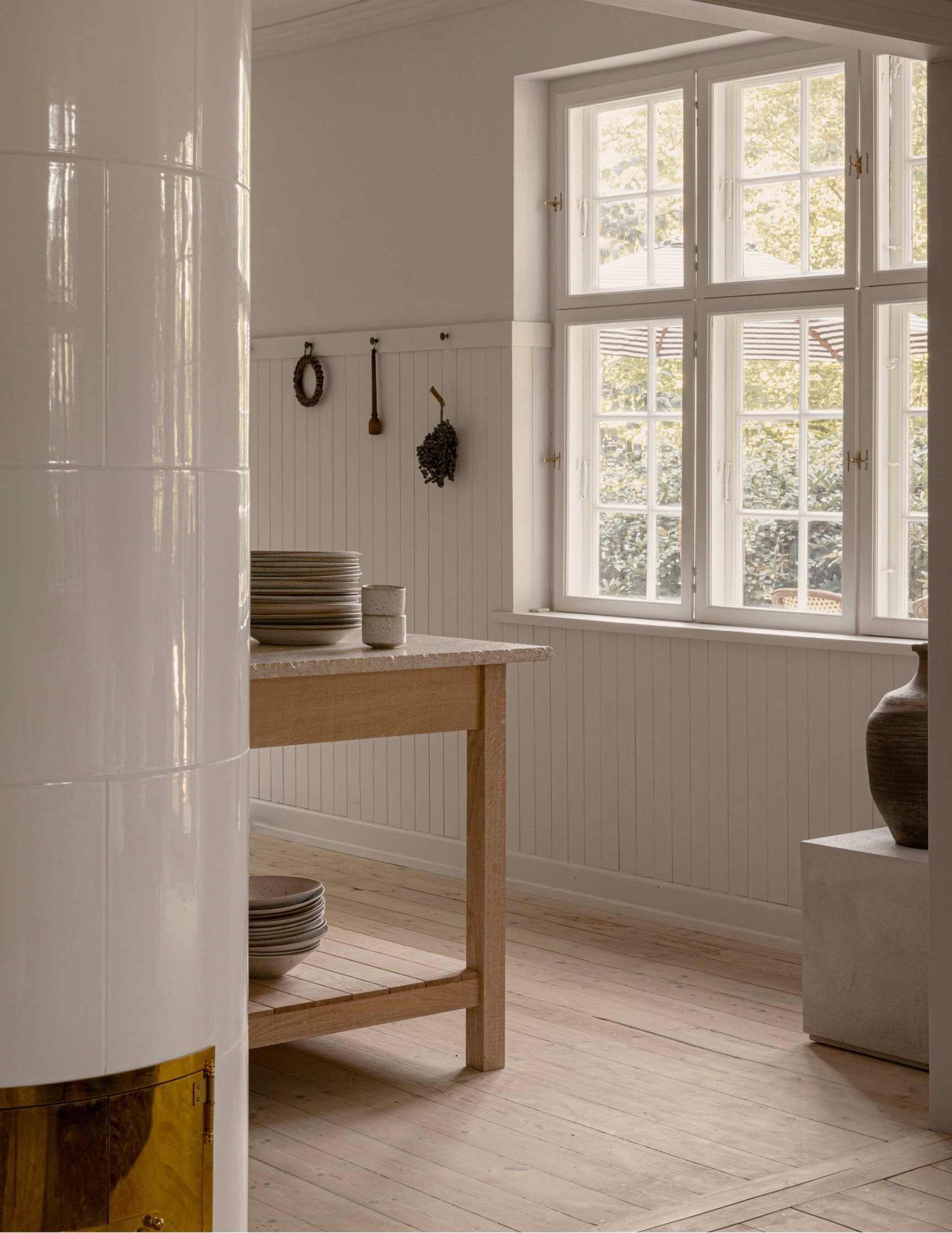
At Norm Architects, this reflects our broader philosophy of “soft minimalism.” We believe in reducing without removing essence, and in creating spaces that support well-being and presence. Rather than imposing a strong signature, we aim to uncover and refine what is already there. No. 16 is ultimately an expression of that approach.
“Light and materials are fundamental to how we perceive and feel a space.”
Light and materials seem to be defining the character and atmosphere of the house. In your opinion, how do they impact the way we experience a space?
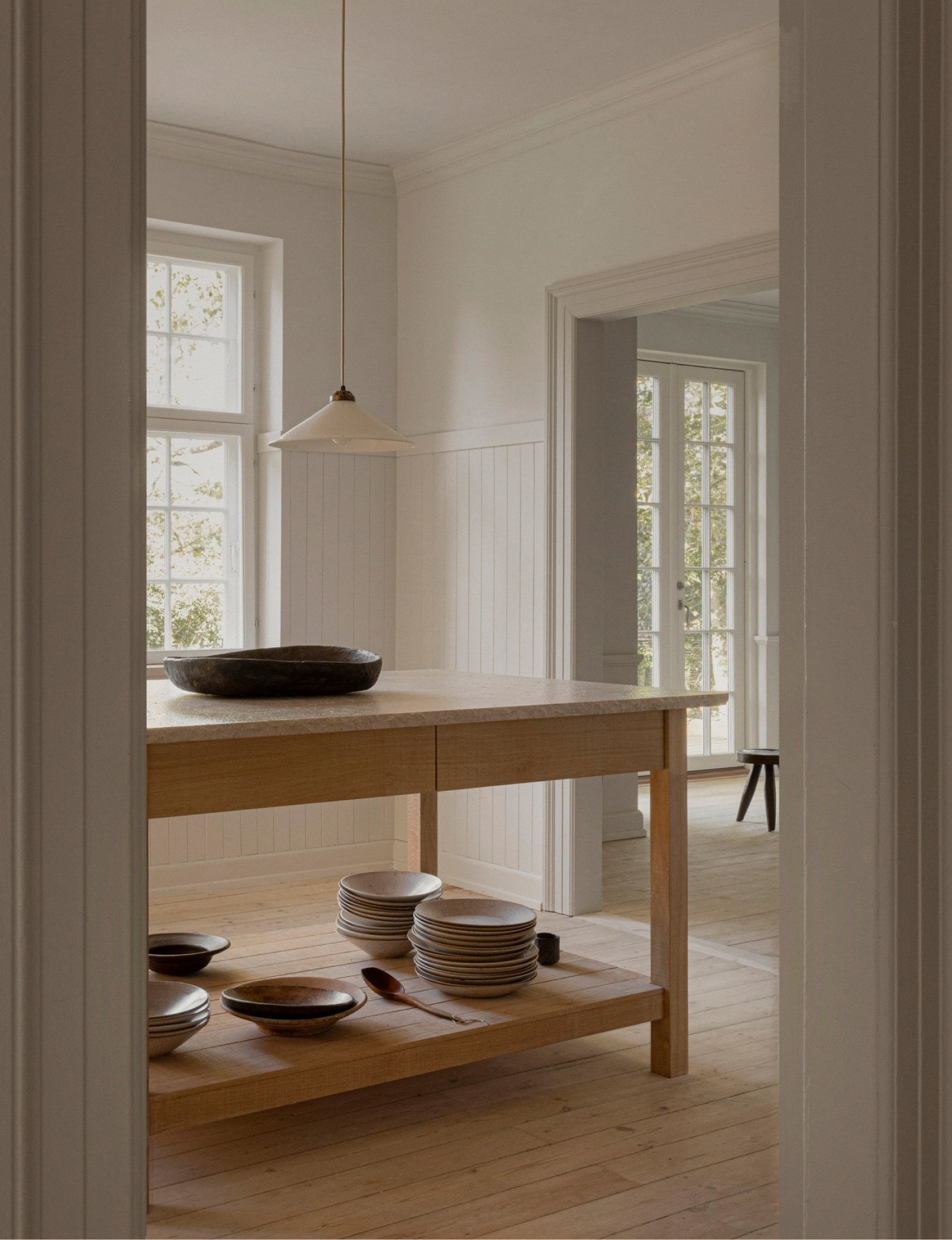
Light and materials are fundamental to how we perceive and feel a space. Natural light, in particular, creates a living rhythm within the house. As it shifts throughout the day, it softens surfaces, deepens shadows, and brings a quiet dynamism to otherwise still spaces. This connection to the passing of time mirrors our innate biological rhythms, grounding us in something more instinctive and calming. The soft, diffused light—reminiscent of Vilhelm Hammershøi’s interiors—creates a sense of stillness that encourages introspection and presence. This feeling is reinforced by the rippled glass of the old windows and the tactile matte natural surfaces of the lime paint I developed for the project.
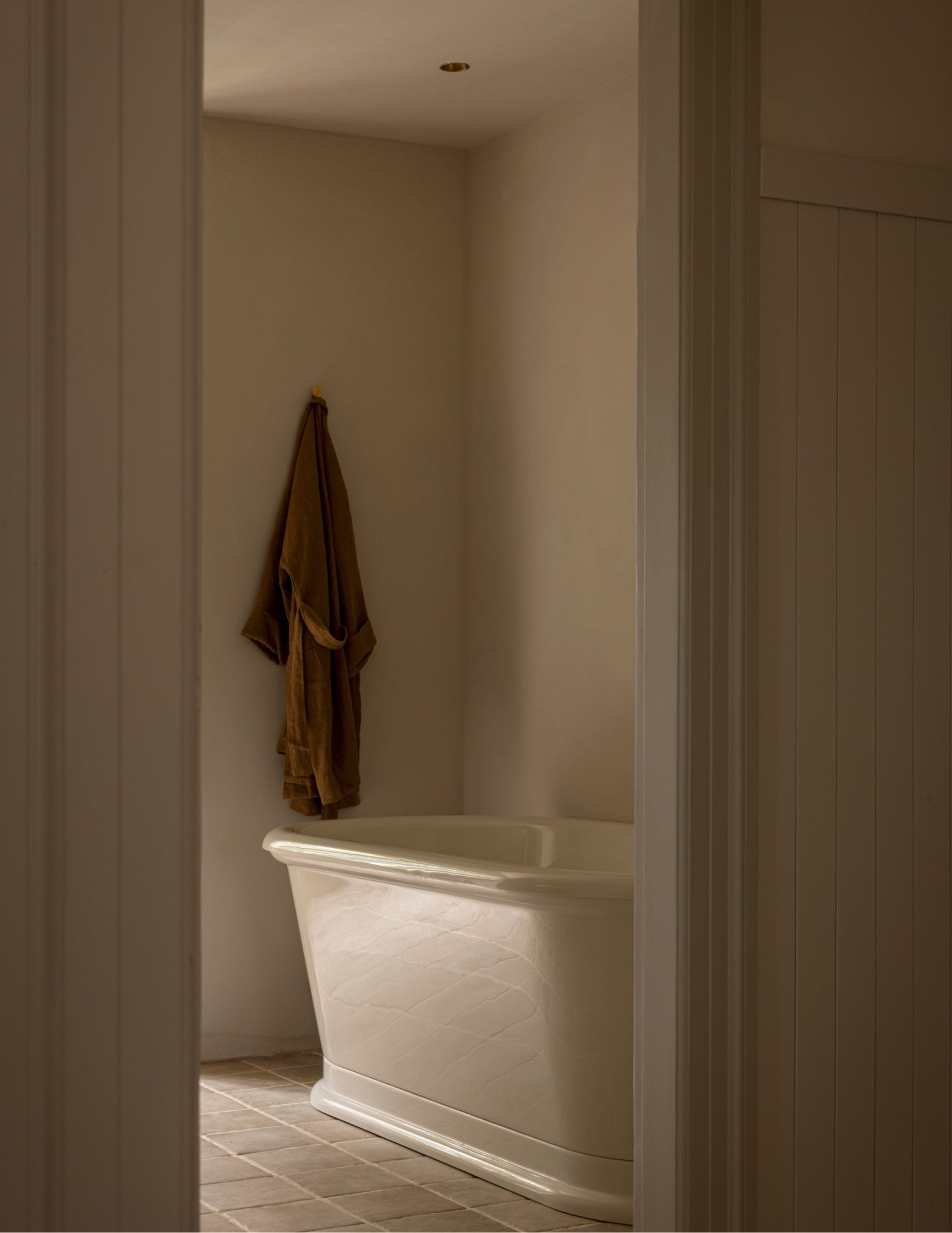
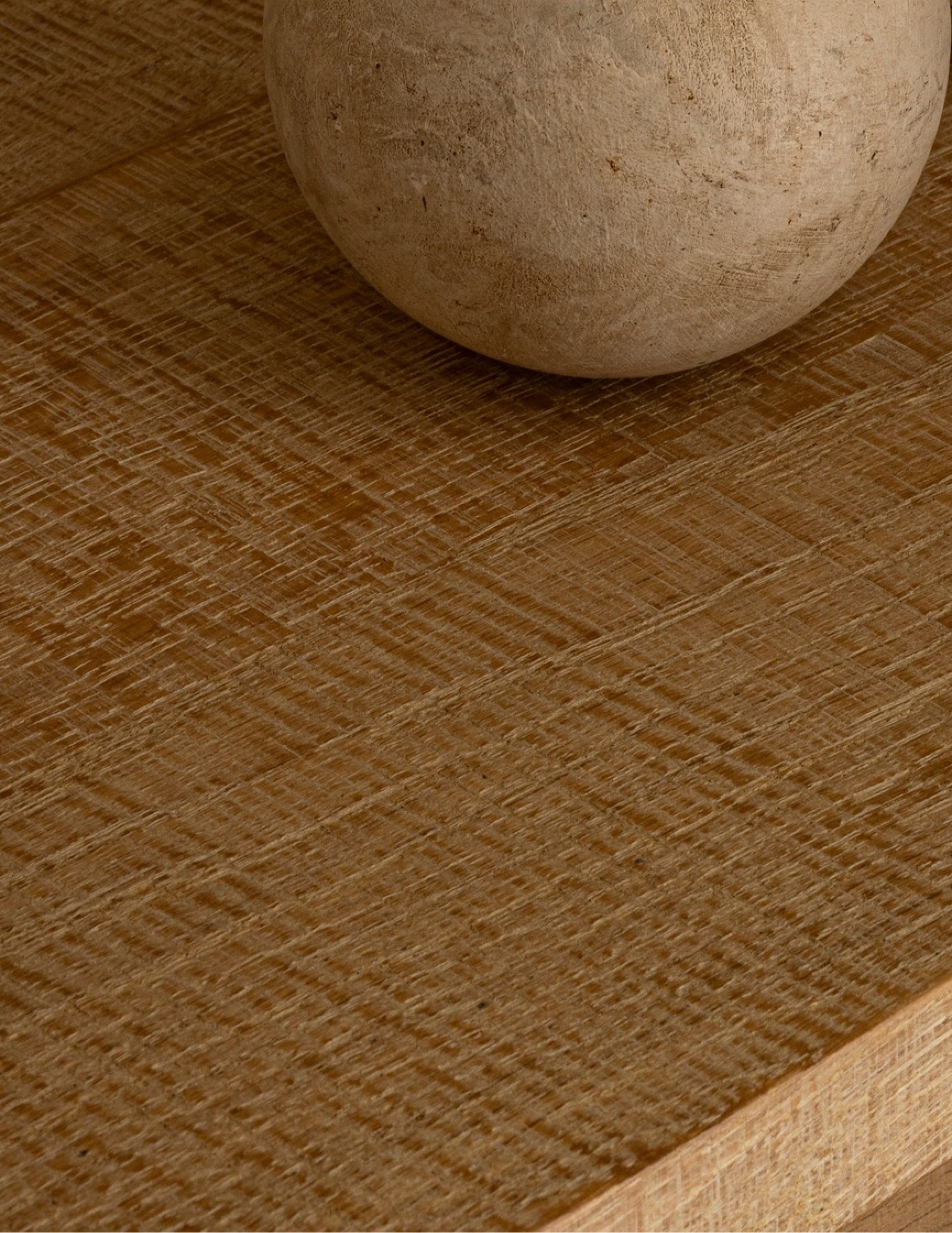
Materials work in a similar way, but through touch and memory. We are inherently drawn to natural materials because they connect us back to the landscapes we evolved in biologically. At No. 16, wood, stone, lime wash, and clay finishes are not only aesthetic choices, but sensory ones. Their textures, imperfections, and ability to age gracefully introduce a sense of authenticity and time.
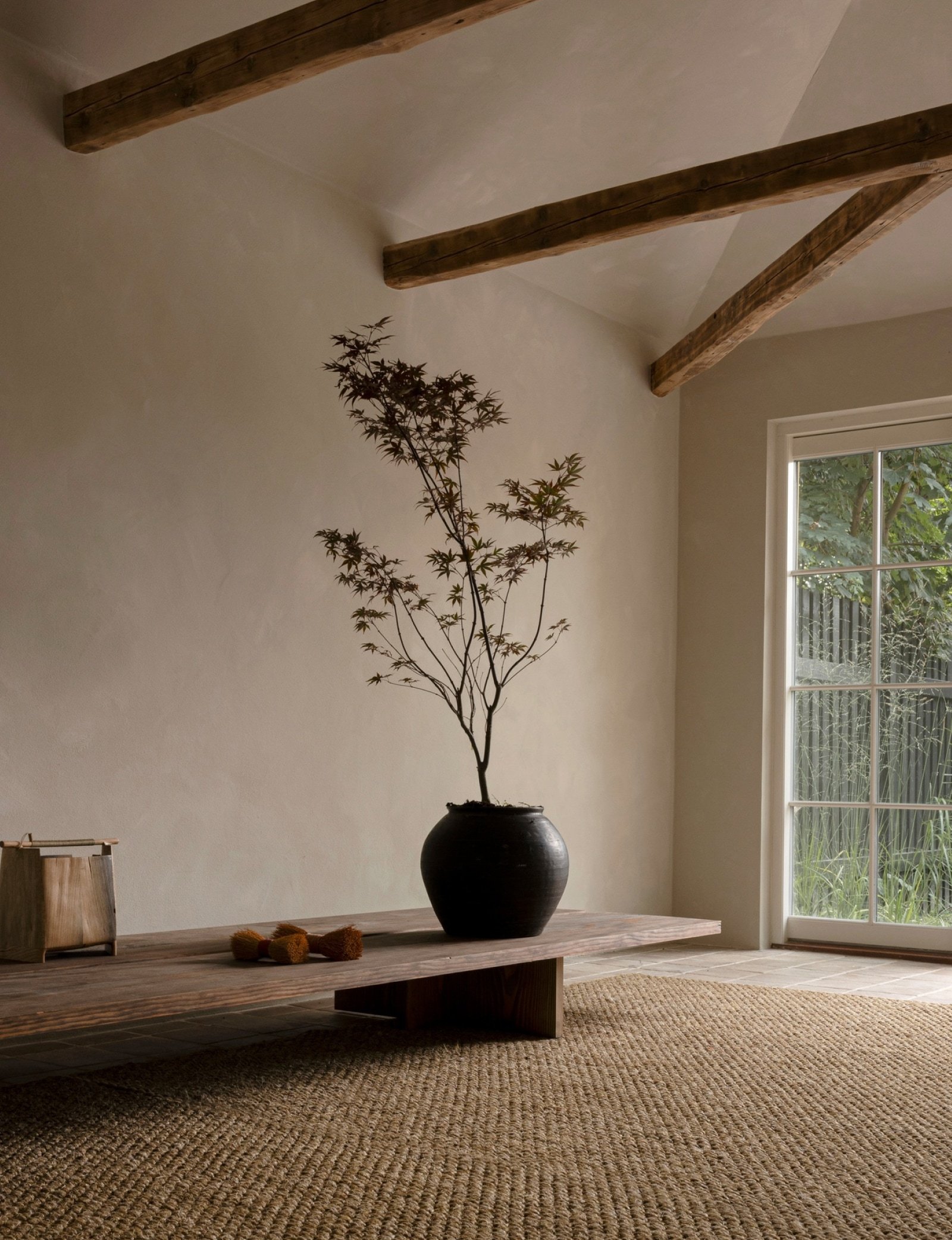
Together, light and materials help bridge the gap between the built environment and nature. They reintroduce a sense of rhythm, tactility, and imperfection—qualities that our bodies instinctively respond to, which calms our nervous system. In this way, the house becomes more than a visual experience; it becomes something you feel.
“The details are not secondary—they are the very means through which simplicity becomes meaningful, and through which atmosphere becomes tangible.”
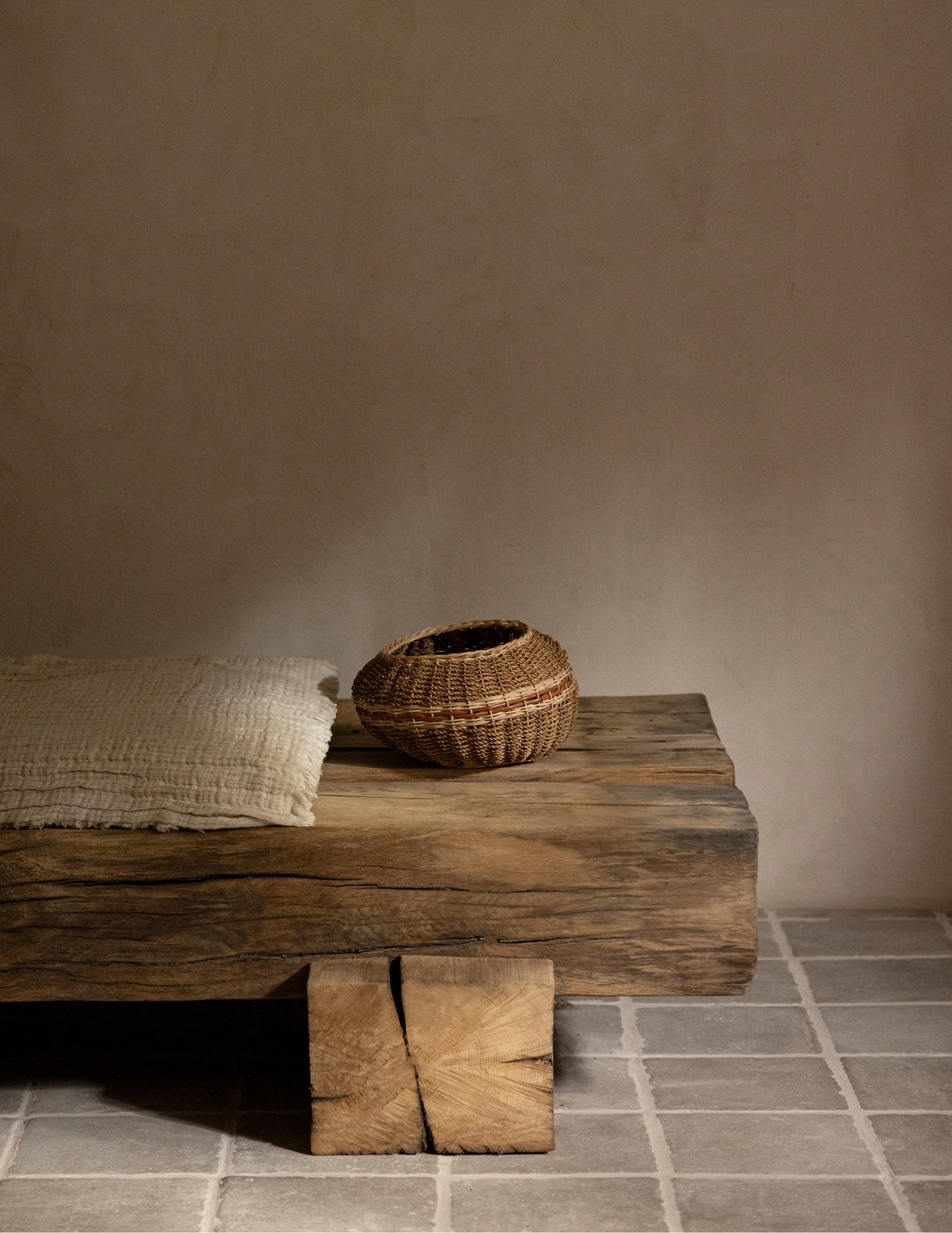
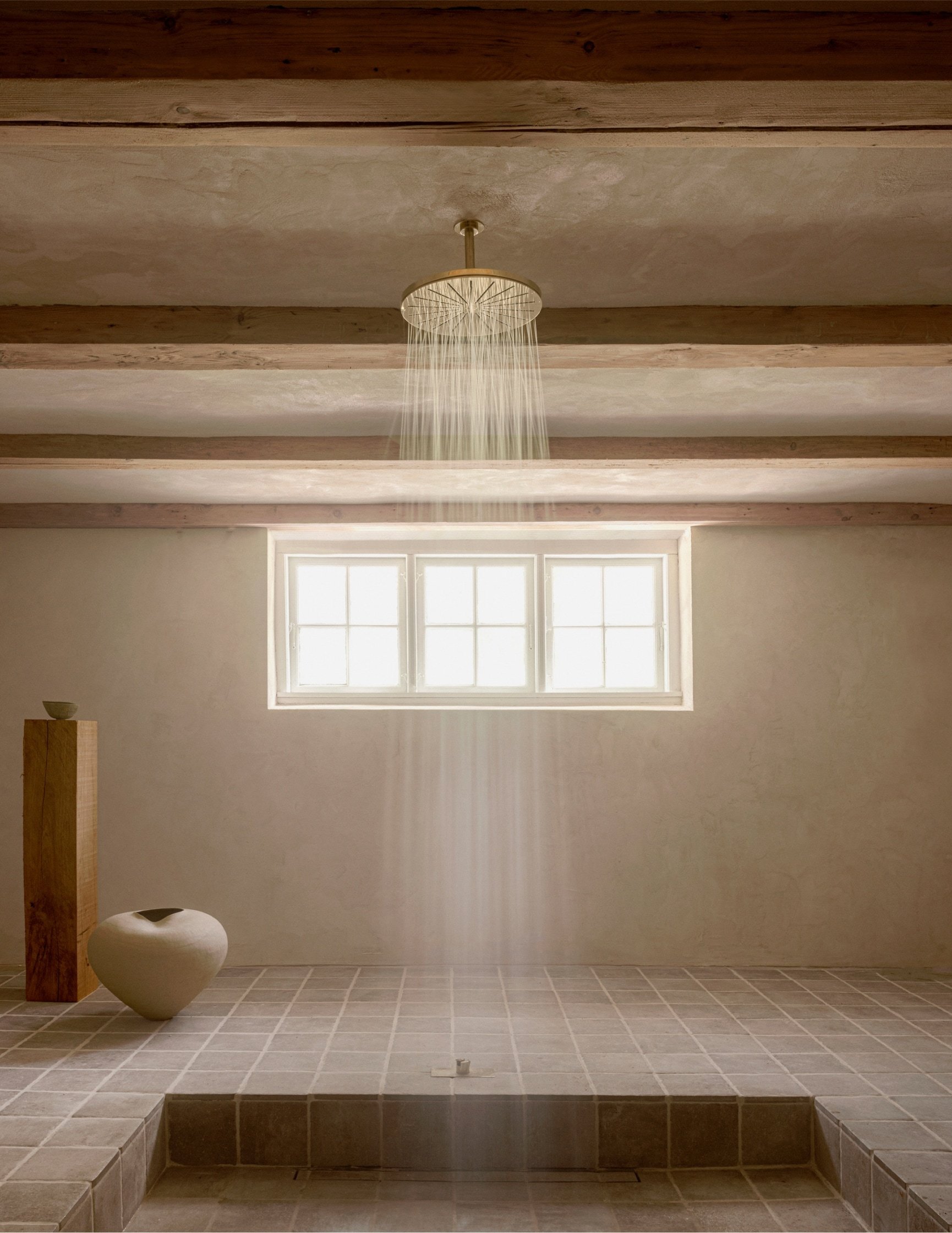
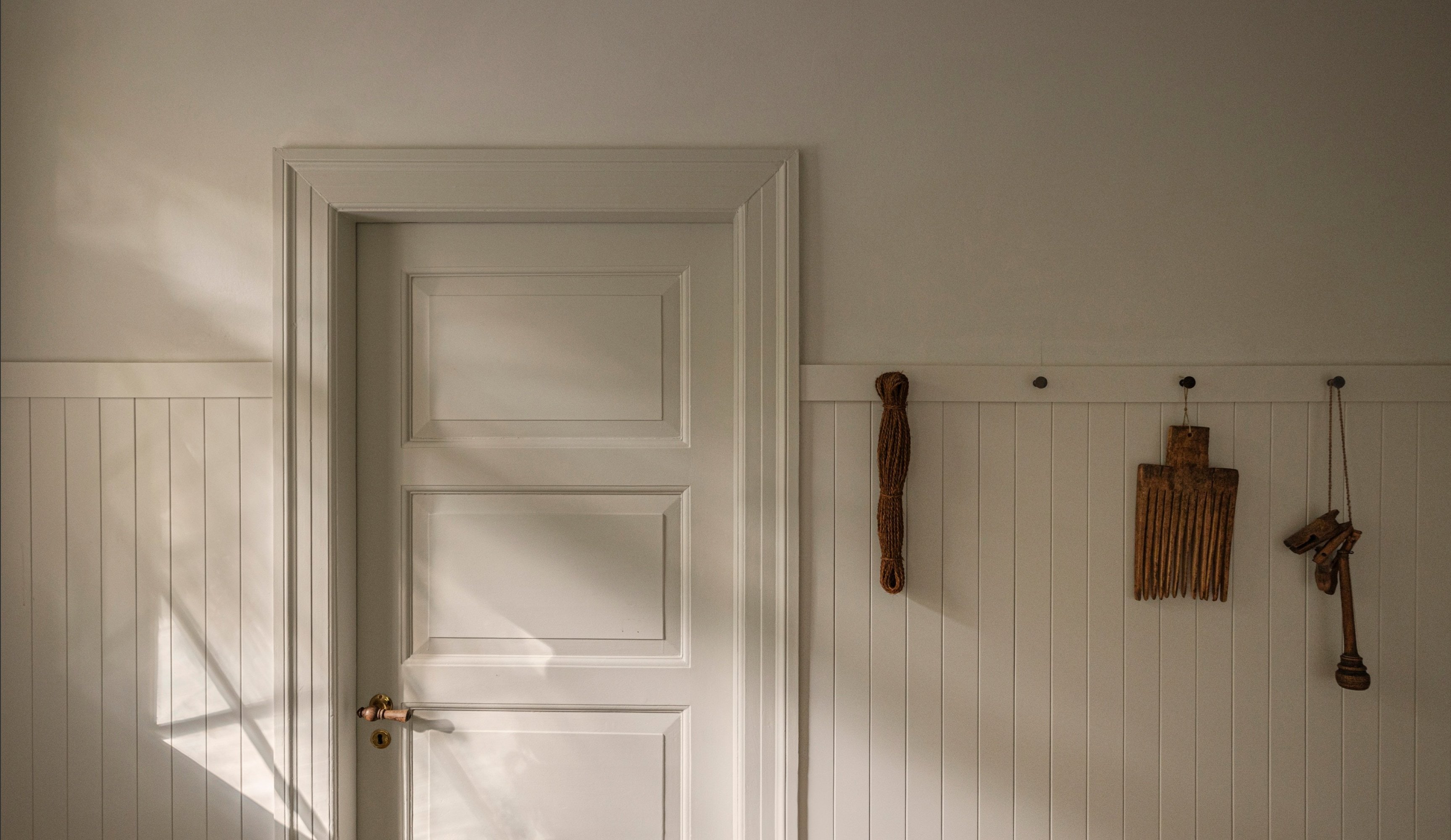
From ceiling stucco to wall panelling to hardware, the attention to detail becomes apparent in every layer. Why do even the tiniest details matter?
In essential interiors, nothing can be left unresolved, because even the smallest inconsistency introduces noise into an otherwise calm environment.
The house is designed as a total environment rather than a collection of rooms, and that is why everything has been considered with the same level of care—from ceiling stucco and wall paneling to hardware, lighting, textiles, furniture, shutters, and even dinnerware and scent. Each element is bespoke, not to create emphasis, but to ensure continuity. When every object shares the same underlying language, the space begins to feel like a harmonized and holistic narrative.
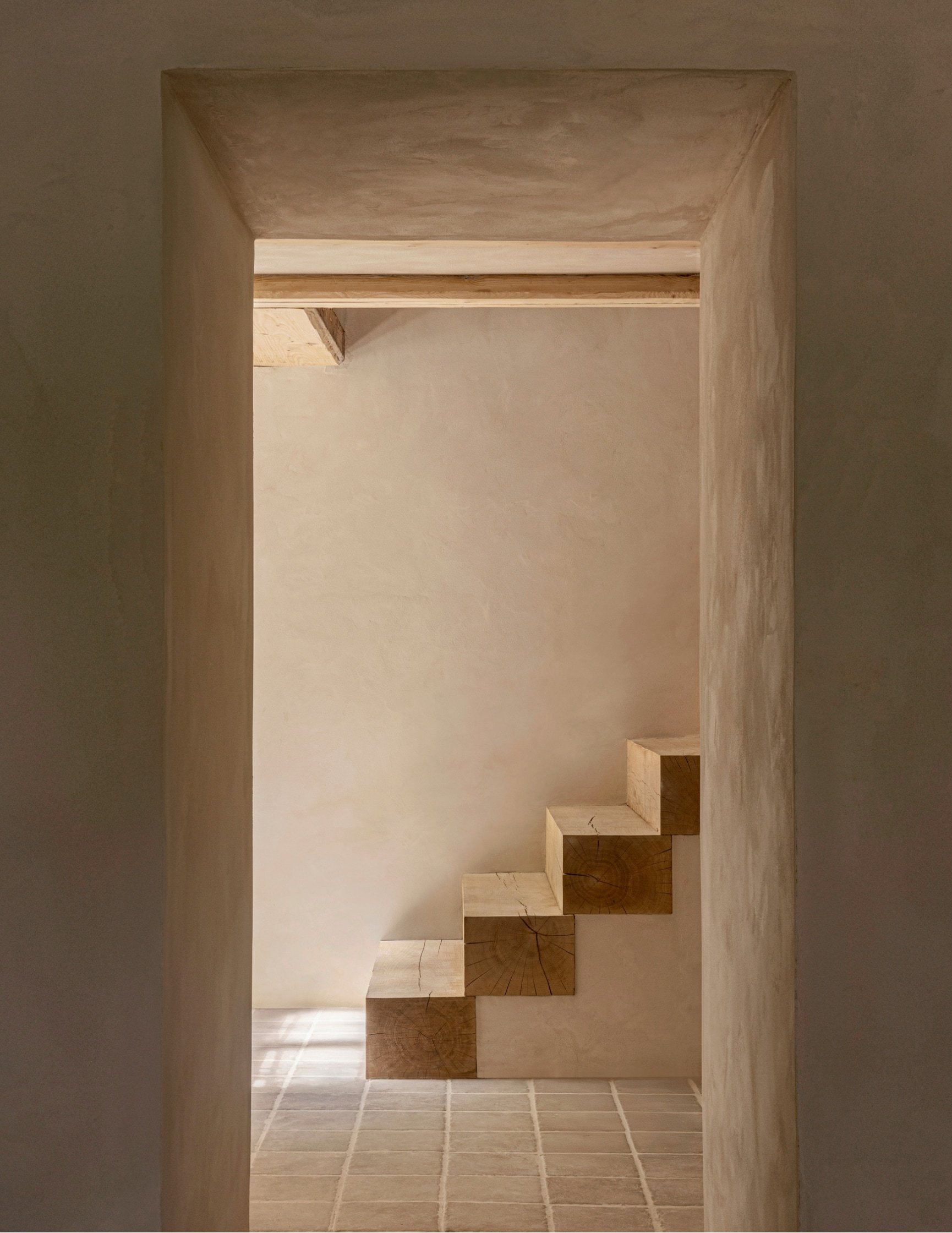
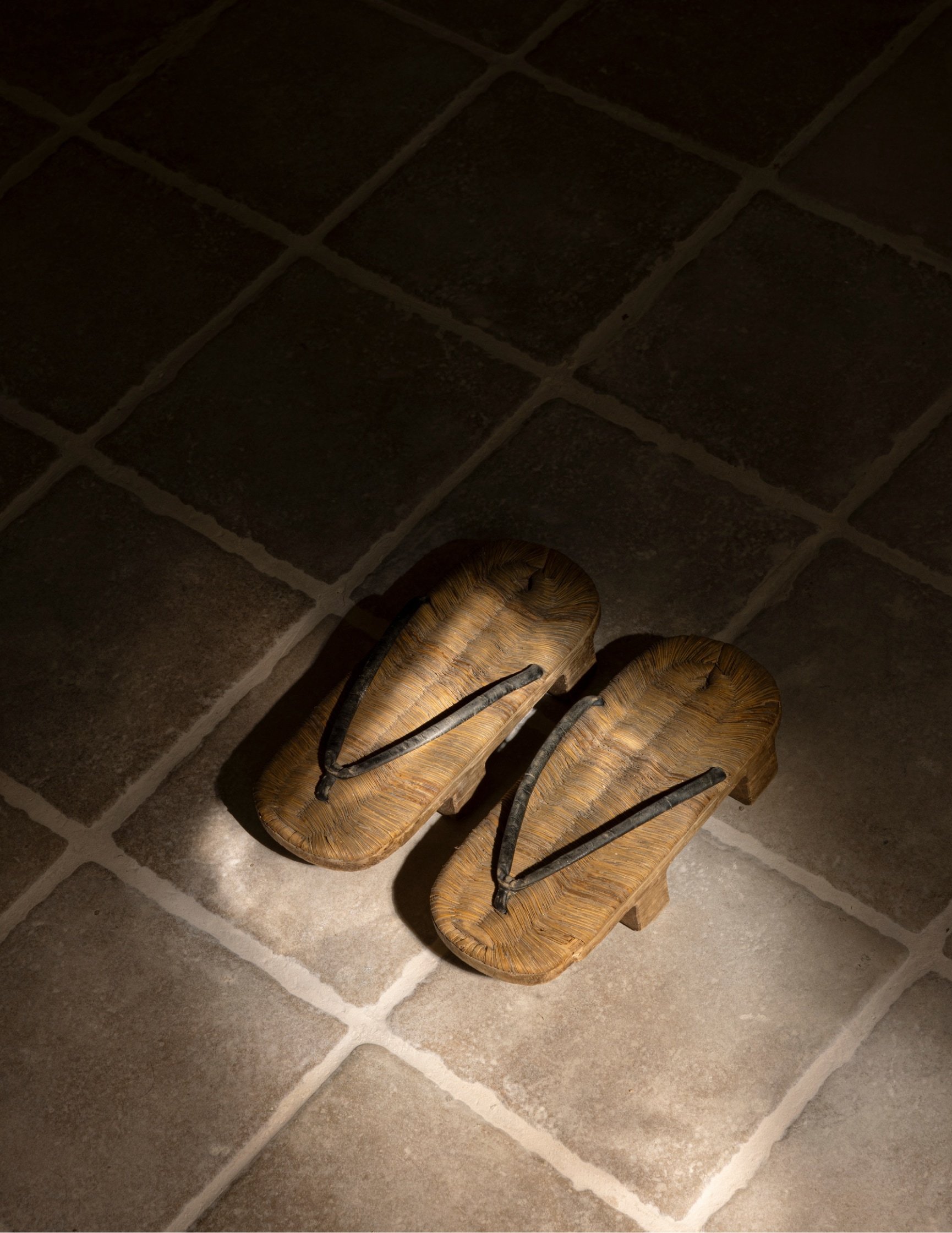
Materials such as lime wash, natural wood, and stone are not simply aesthetic choices, but atmospheric tools. The lime-painted surfaces, for example, absorb and diffuse light in a soft, irregular way, giving walls a sense of depth, naturalness and breathability. Bespoke lighting was designed to avoid harsh contrasts, instead reinforcing the slow, changing rhythm of daylight. Hardware, often overlooked in interiors, was carefully developed to feel tactile and grounded—small points of contact that quietly reinforce the overall experience of quality and care.
The same logic extends to furniture and objects. Tables, soft seating, shutters, paneling, light, artwork, fabrics and much more were designed in dialogue with the architecture so that the structure of the house and loose interior pieces feel inseparable. Even the dinnerware carries the same ethos—simple, tactile, natural, and rooted in material honesty.
This level of detail is not about perfection, but about coherence and atmosphere. When every element is tuned to the same sensibility, the house begins to feel calm without effort. There is no visual resistance, no interruption—only a continuous field of material, light, and proportion that supports presence. That’s the aim.
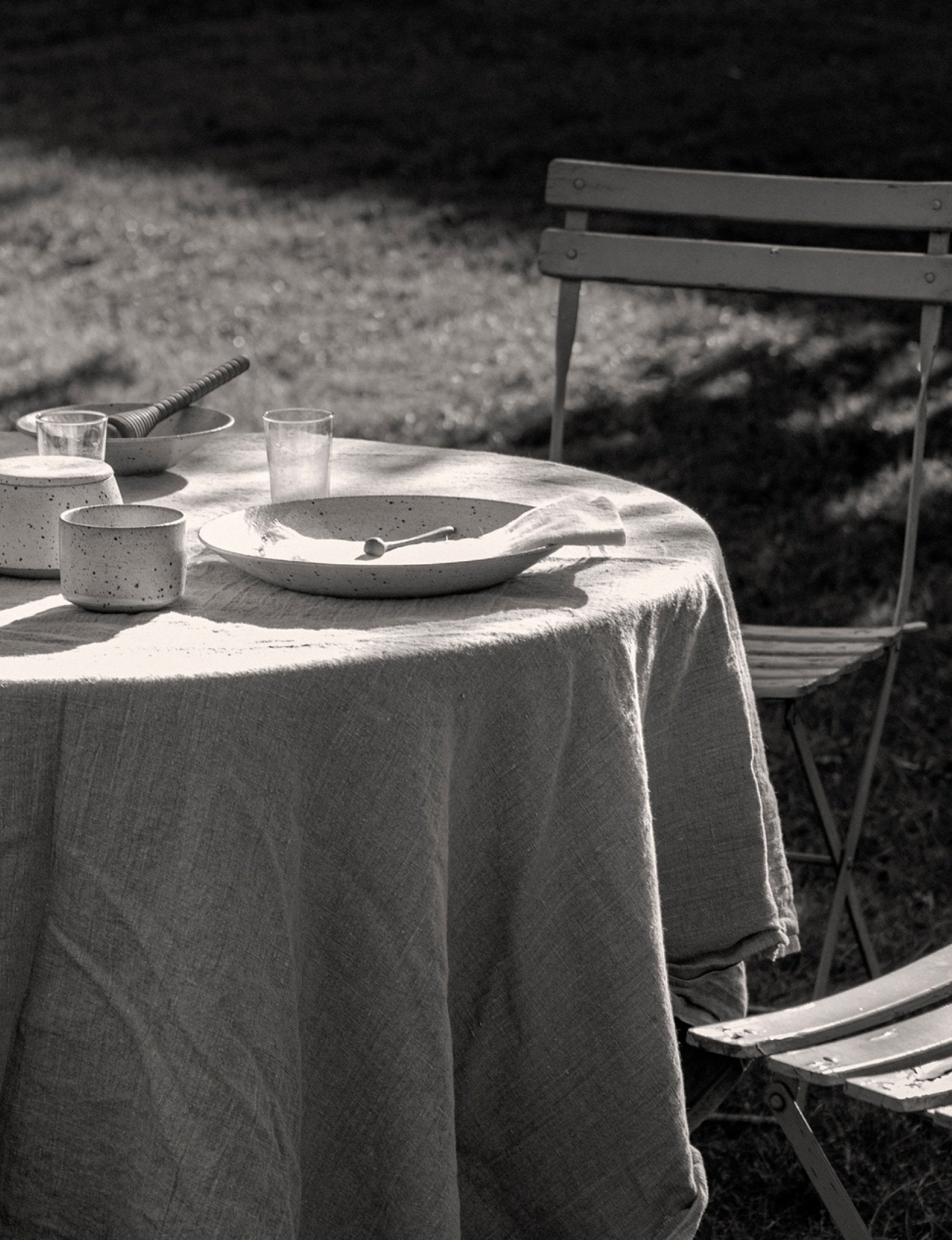
This approach is deeply connected to our work at Norm Architects, where we often describe essential interiors as a process of restraint through refinement. It is not about removing life from a space, but about distilling everything down to what supports it. In that sense, the details are not secondary—they are the very means through which simplicity becomes meaningful, and through which atmosphere becomes tangible.
“Just like a perfectly tailored shirt looks and feels far better than a generic one, the same applies to the spaces and objects we create.”
You work with bespoke furniture. What’s the special appeal of getting something made specifically for you, be it furniture or, in our case, a piece of clothing?
Creating bespoke design, for me, is often part of shaping a specific atmosphere for a project. In many cases, I try to find objects or elements that fit a certain vision, but more often than not I cannot find them and therefore have to create them.
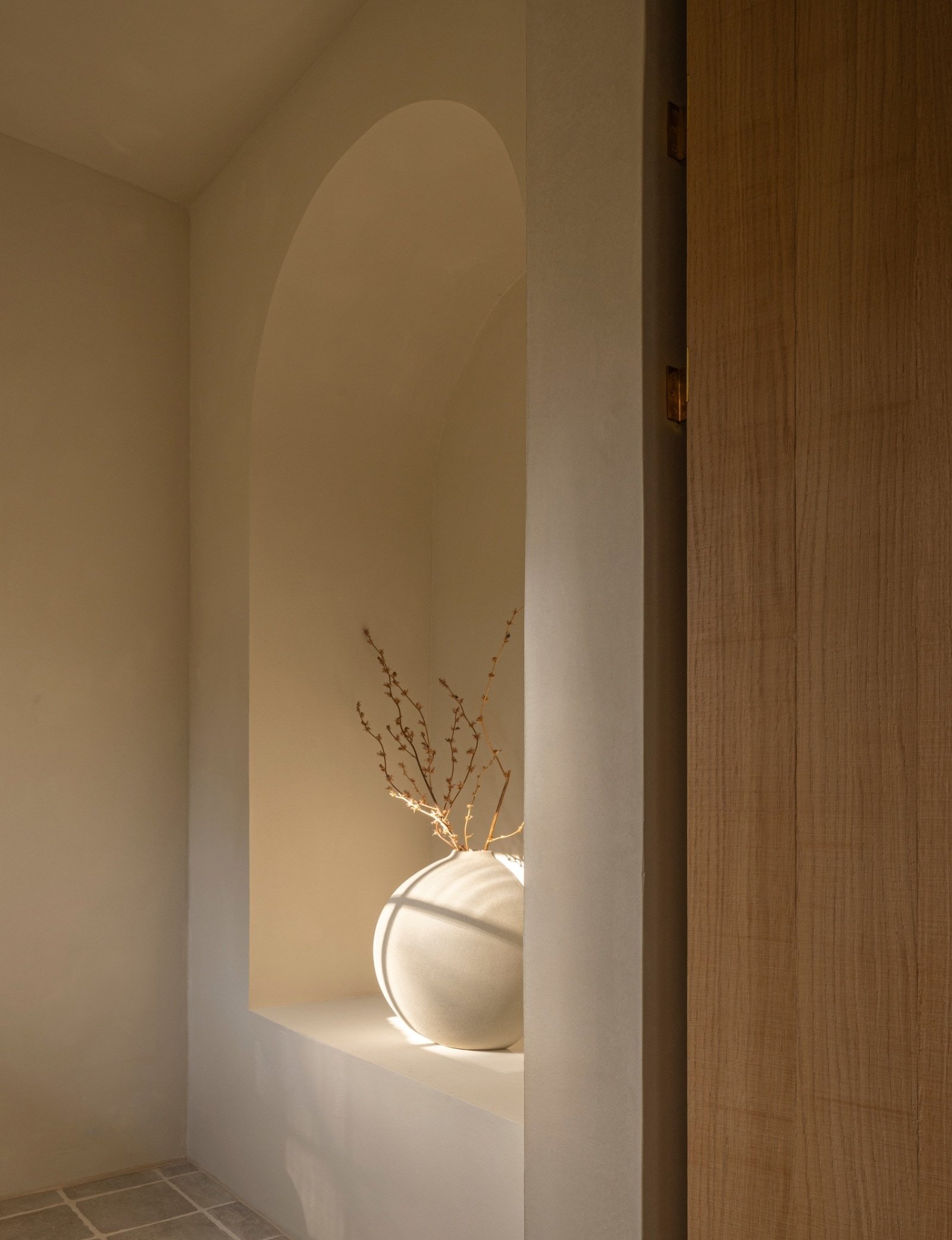
By designing things specifically for their context, each element becomes part of the atmosphere it helps shape—whether that is how light is reflected on a particular material, how a raw surface invites touch, or how a piece of furniture fits precisely within the dimensions of a niche in a room. Just like a perfectly tailored shirt looks and feels far better than a generic one, the same applies to the spaces and objects we create.
“The house plays a very layered role in my experience of the Danish summer—it is not defined by a single function, but by its ability to shift between different states of life.”
Which role does the house play for your personal experience of the Danish summer, how do you use it?
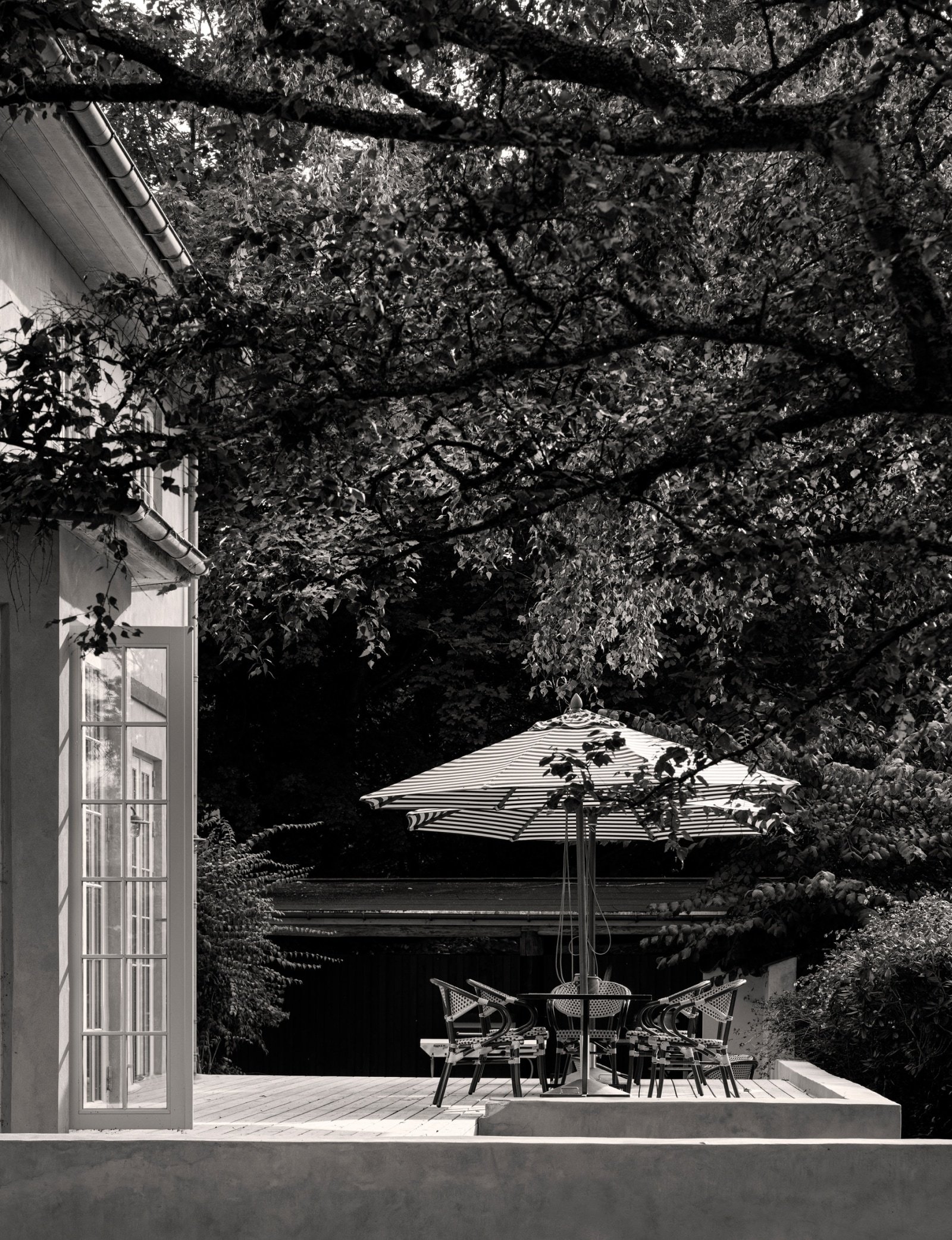
The house plays a very layered role in my experience of the Danish summer—it is not defined by a single function, but by its ability to shift between different states of life. It allows for both solitude and togetherness, stillness and activity, often within the same day.
At times, it is a place of withdrawal, where I can isolate myself to write, paint, or work on sculptures in quiet focus in the annex. In other moments, it becomes a social framework for large family gatherings, long dinners, and evenings with friends around the fire, where conversation stretches late into the night. It also holds a more everyday rhythm—kids moving in and out, shared meals, and informal time together that feels unstructured and easy.
Equally important is its connection to the surrounding landscape. Walking in Tisvilde Hegn, swimming in the sea, playing tennis on the lawn, or simply watching deer in the early morning or stargazing at night all become part of the same summer experience. The house is designed to dissolve the boundary between inside and outside, so these moments feel continuous rather than separate.
In that sense, the house is tailored as a kind of flexible frame for life. Spaces are arranged to support both intimacy and openness, allowing rooms to feel calm and contemplative when needed, but also generous and social when filled with people.
Learn more about Guest House No. 16 and Jonas’ work with Norm Architects here.
Further Reading
Curating Masseria Moroseta
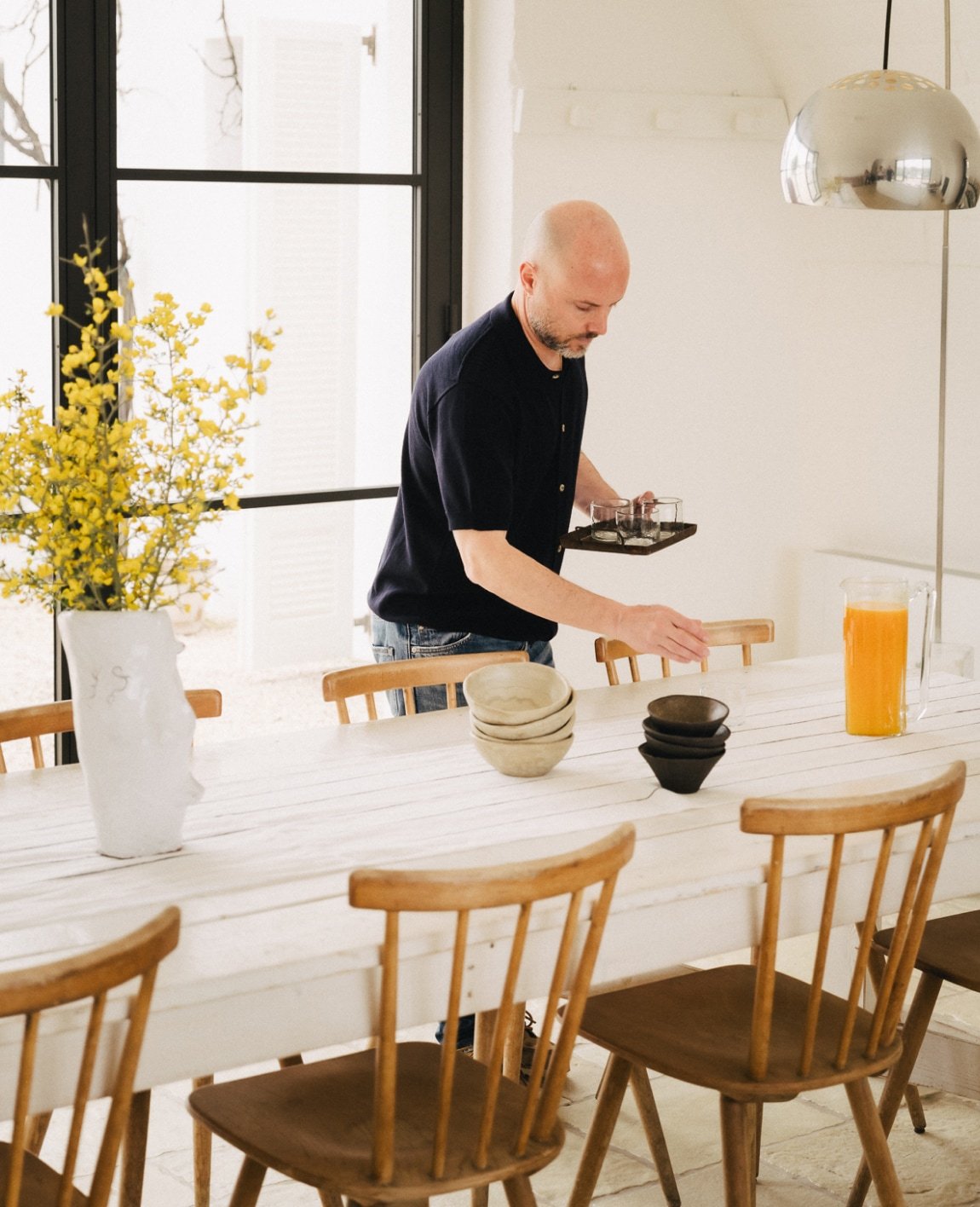
Founder Carlo Lanzini explores, joined by Giorgia Eugenia Goggi, who helms the in-house Moroseta Kitchen, what it means to invite guests into your universe, the benefits of growing your own produce, and bridging tradition with new ways of thinking.

Designing for lasting impact with Muyiwa Oki
Architect and former RIBA President Muyiwa Oki on the power of reconstruction and using his own success to open doors for a new generation