Blueprint Studies #1: NM3
In Milan with Francesco Zorzi and Nicolò Ornaghi, the architectural duo building a modular design system guided by the strict manufacturing rules of industrial metal.
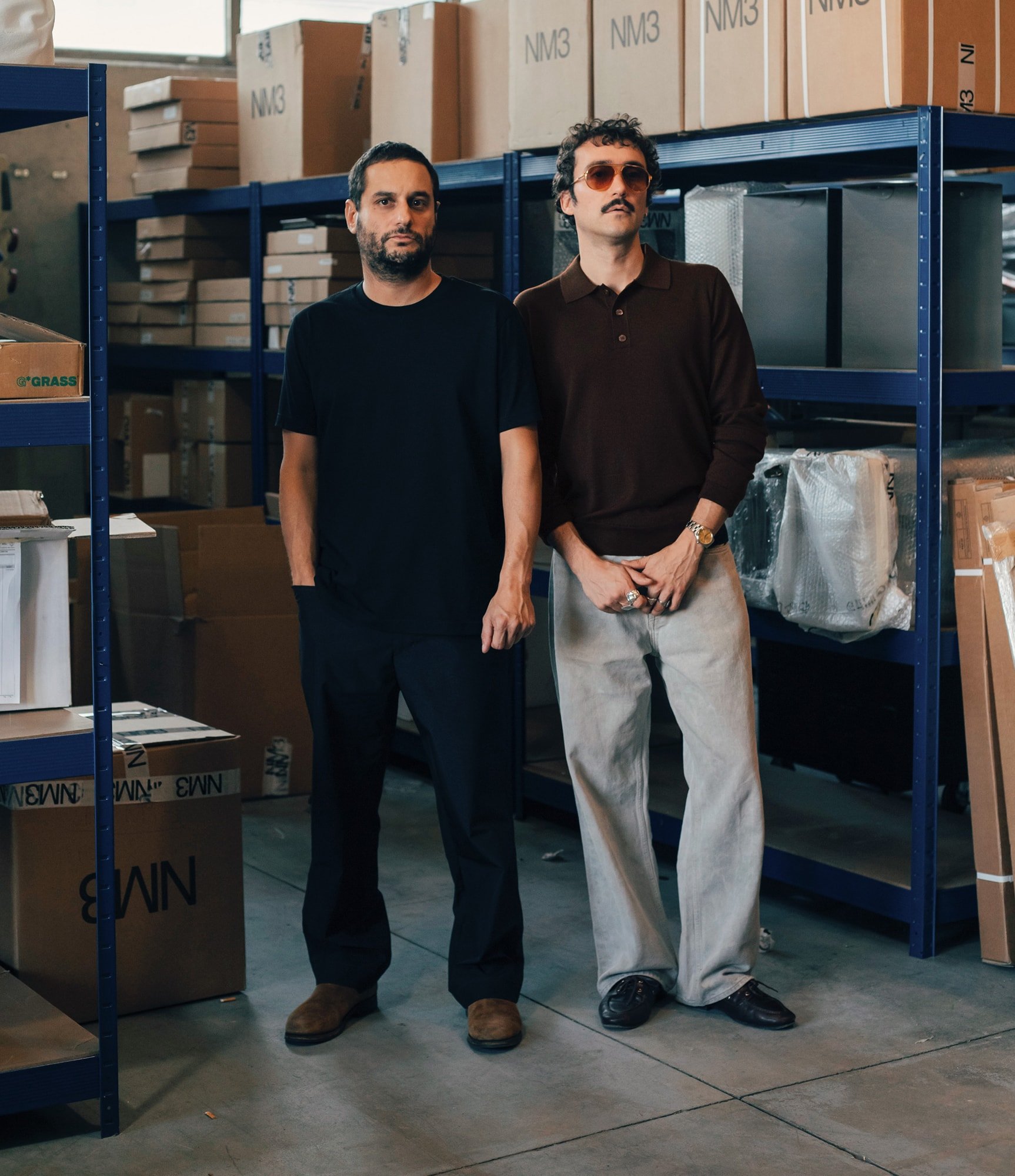
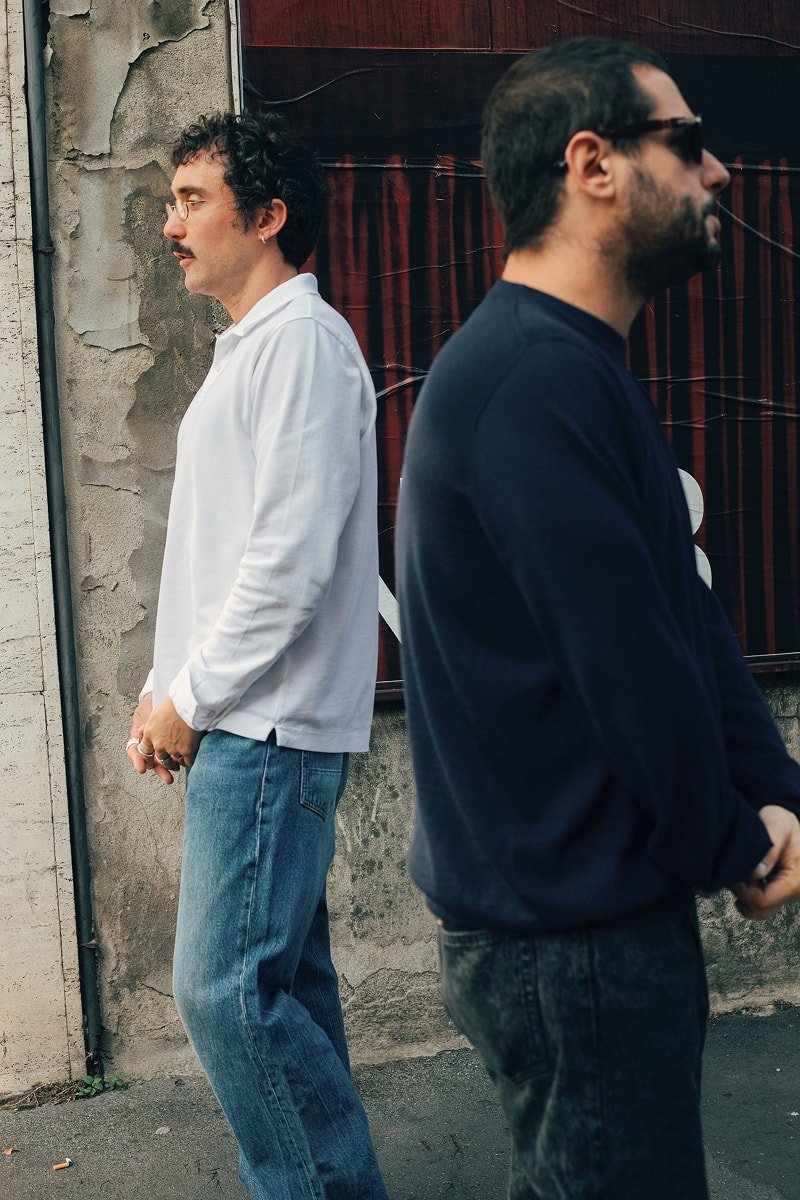
Blueprint Studies is Son of a Tailor’s editorial platform for in-depth conversations with the people who dismantle dominant paradigms and redesign systems with intention. For the inaugural edition, we travel to Milan to visit Francesco Zorzi and Nicolò Ornaghi, the architectural minds behind design company NM3.
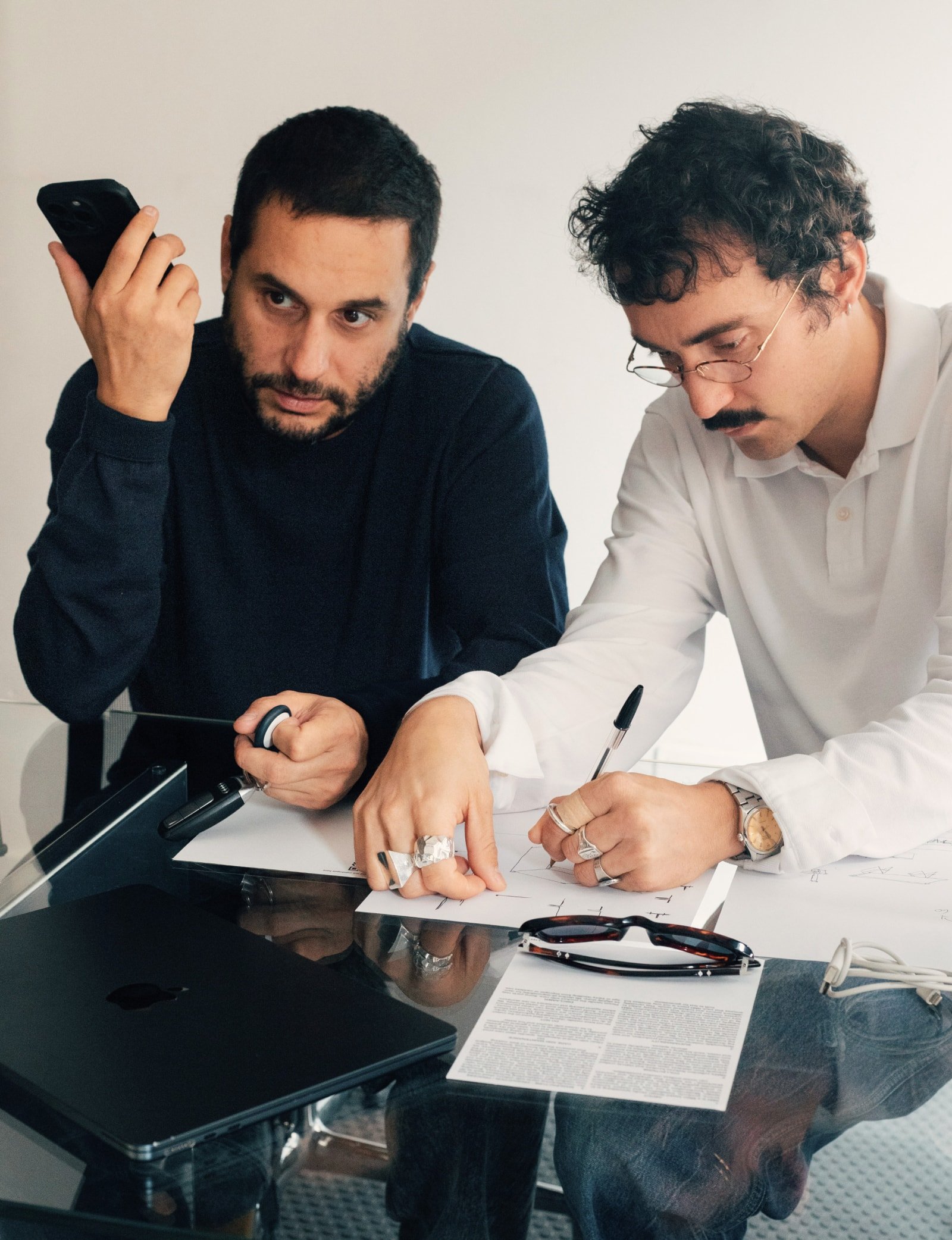
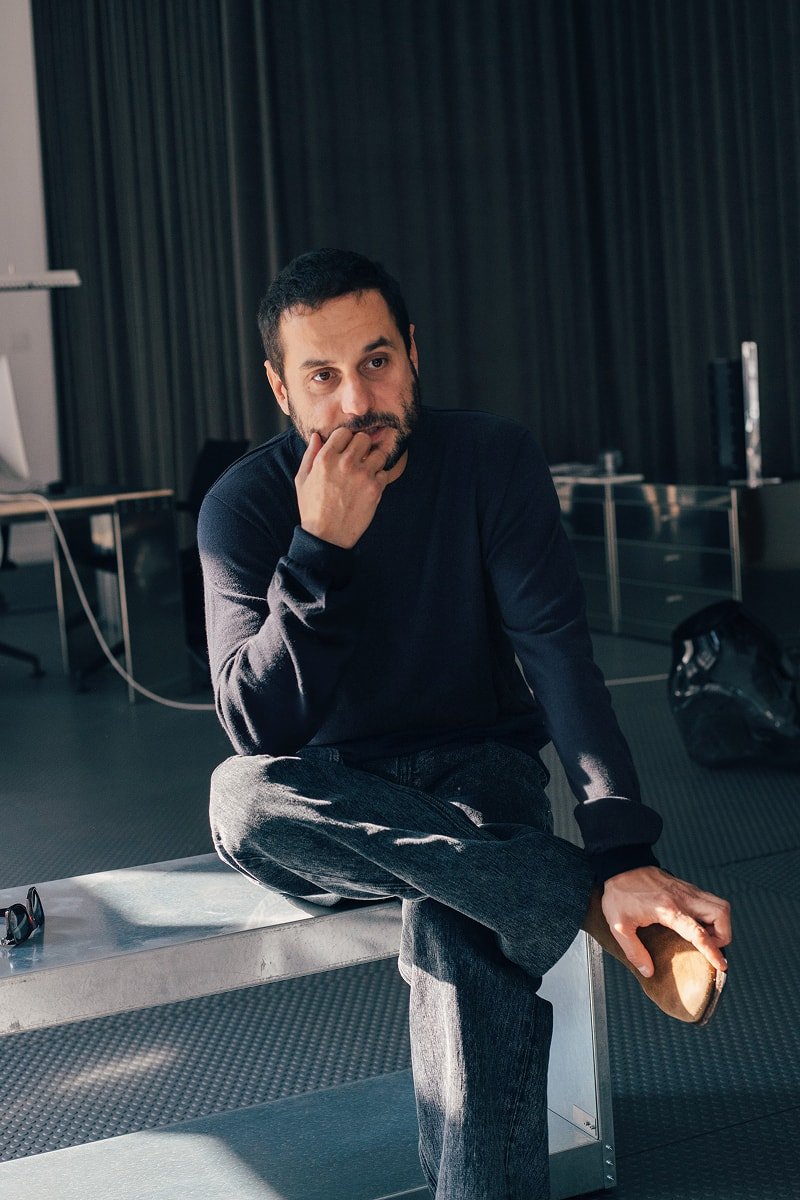
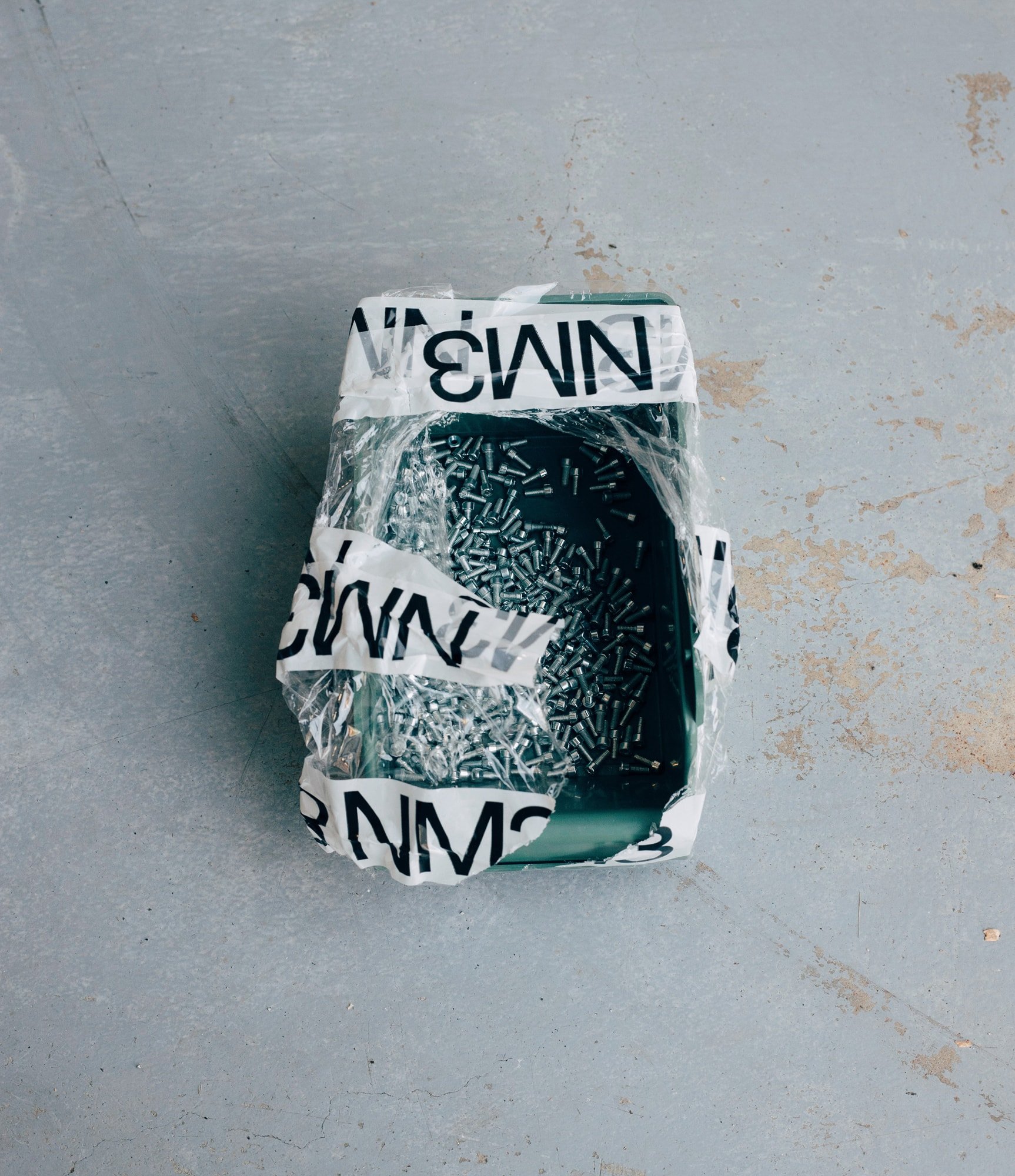
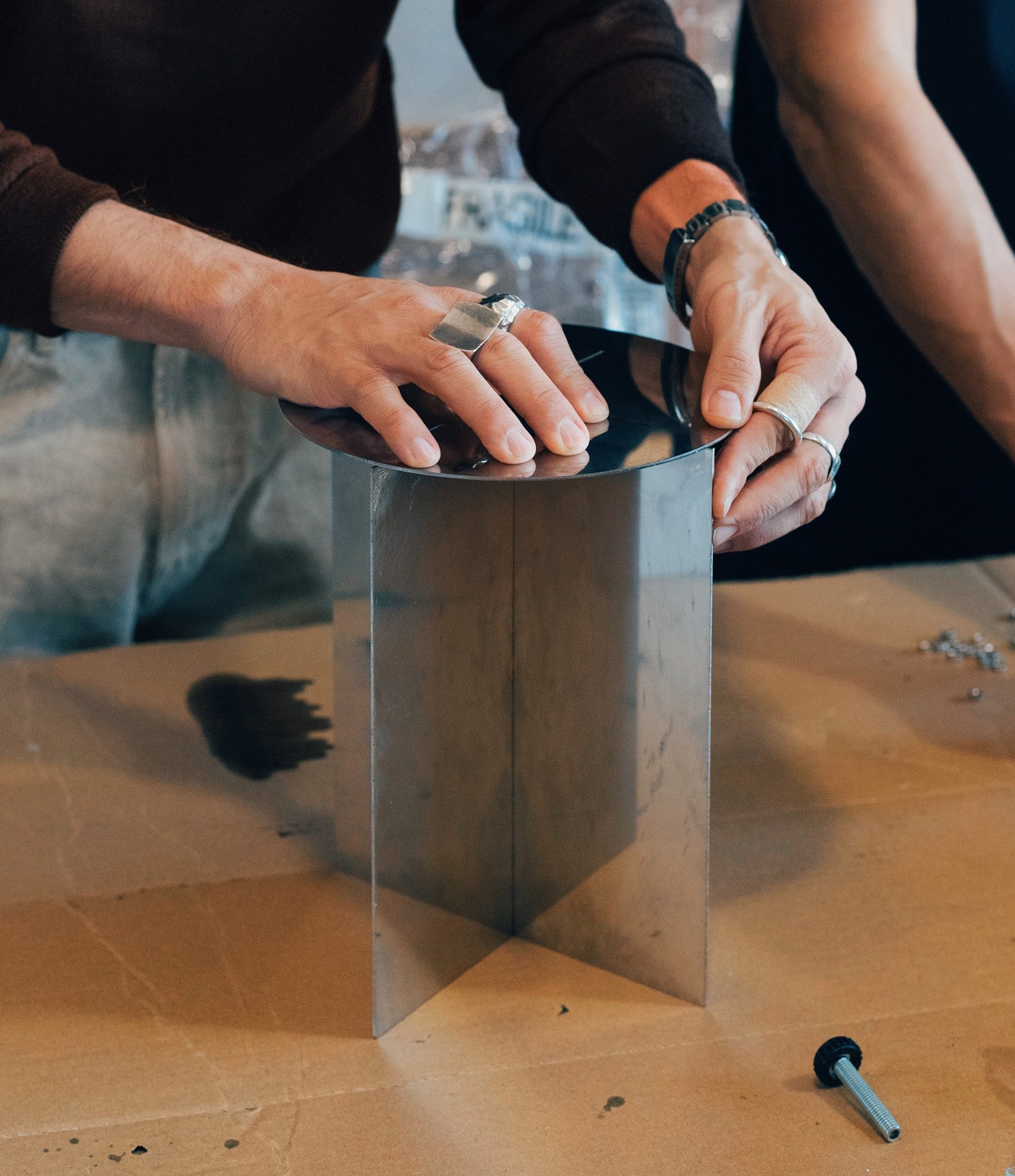
“It’s all about precision,” summarizes Nicolò Ornaghi, CEO of NM3. It immediately brings to mind the satisfying click from the previous day in the assembly hall, when Creative Director Francesco Zorzi had locked two raw components into a steel pedestal.
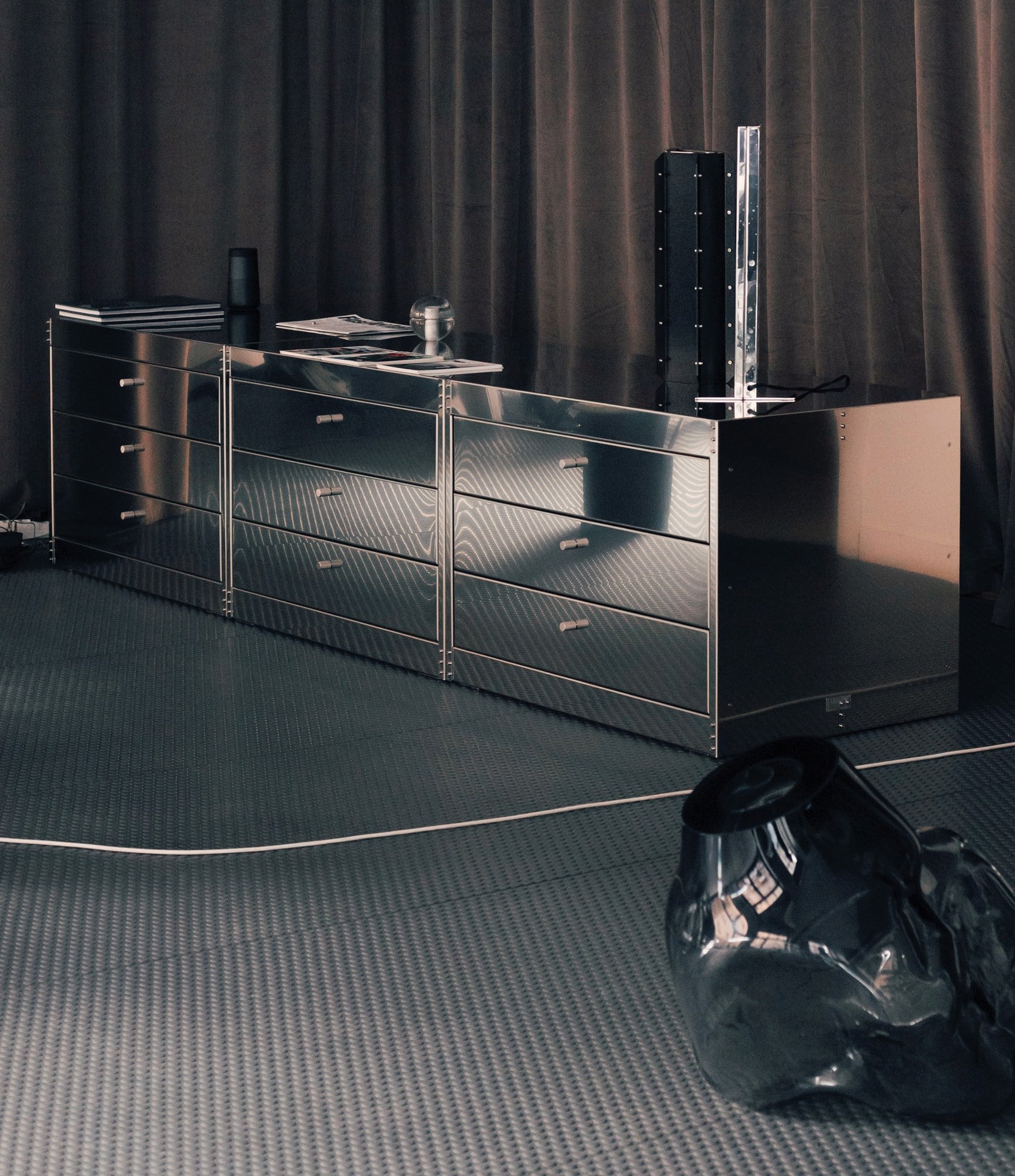
From objects to furniture to exhibition design and full interiors, the Milanese design company has been making waves with its minimalist, sleek visual language and uncompromising design ethos – earning them widespread critical acclaim from major publications including Wallpaper and Architectural Digest while working for brands such as Our Legacy, Adidas or Ferrari. NM3 developed a system that lets them create modular and custom designs within the strict manufacturing rules of industrial metal sheets. We’re here in Milan to learn more about their approach.
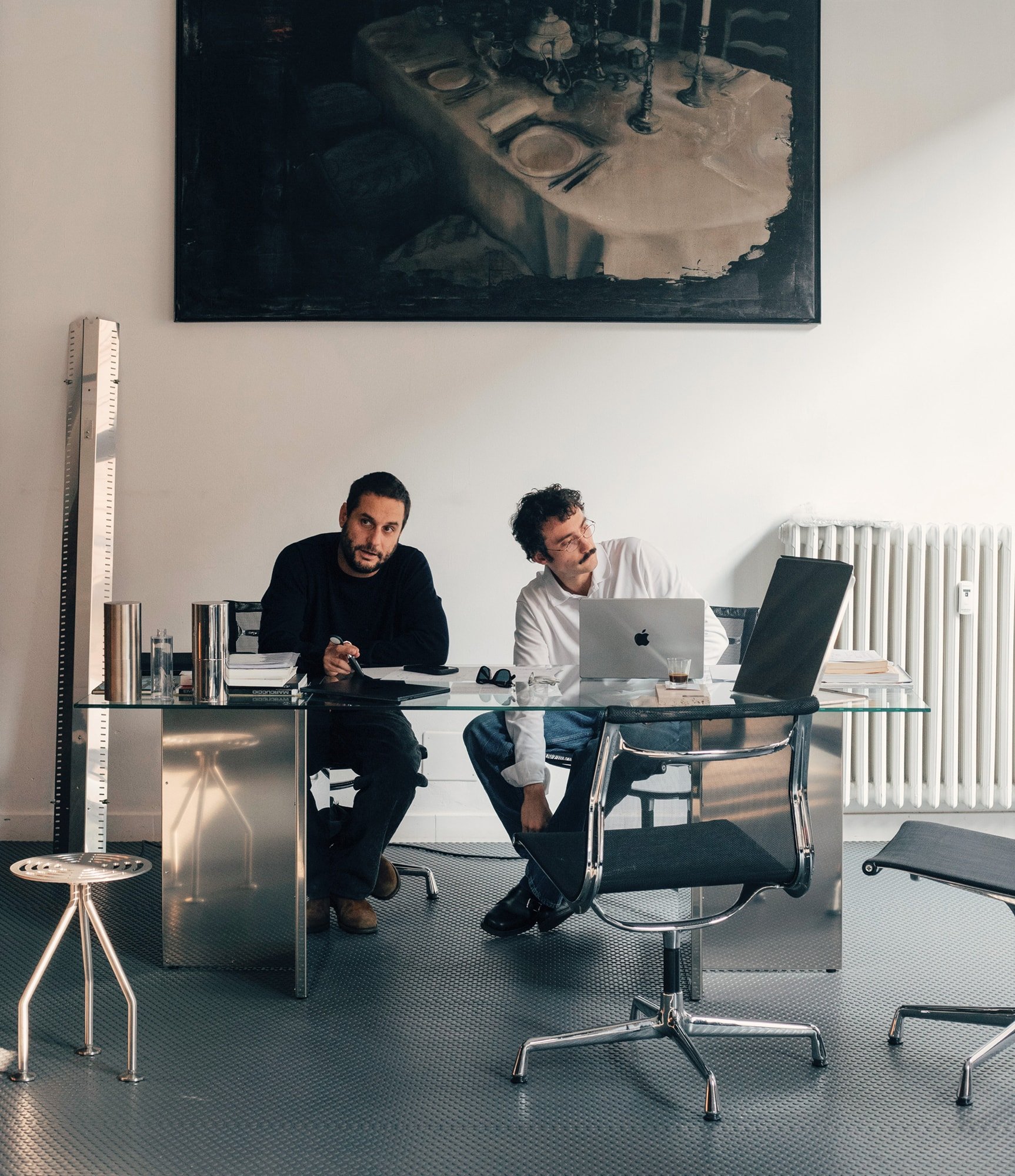
“All these constraints are a consistent part of our design process.” – Francesco
Rule-bound Creativity
NM3’s approach is guided by the rules behind the manufacturing process of lightweight metal carpentry. “Design-wise, we work with specific materials and their specific set of rules,” states Francesco. But for the team, these technical constraints function as a creative scaffold to create precision modular designs: a pre-defined set of materials and techniques serves as the starting point for all work, whether it results in an exhibition space or a desk.
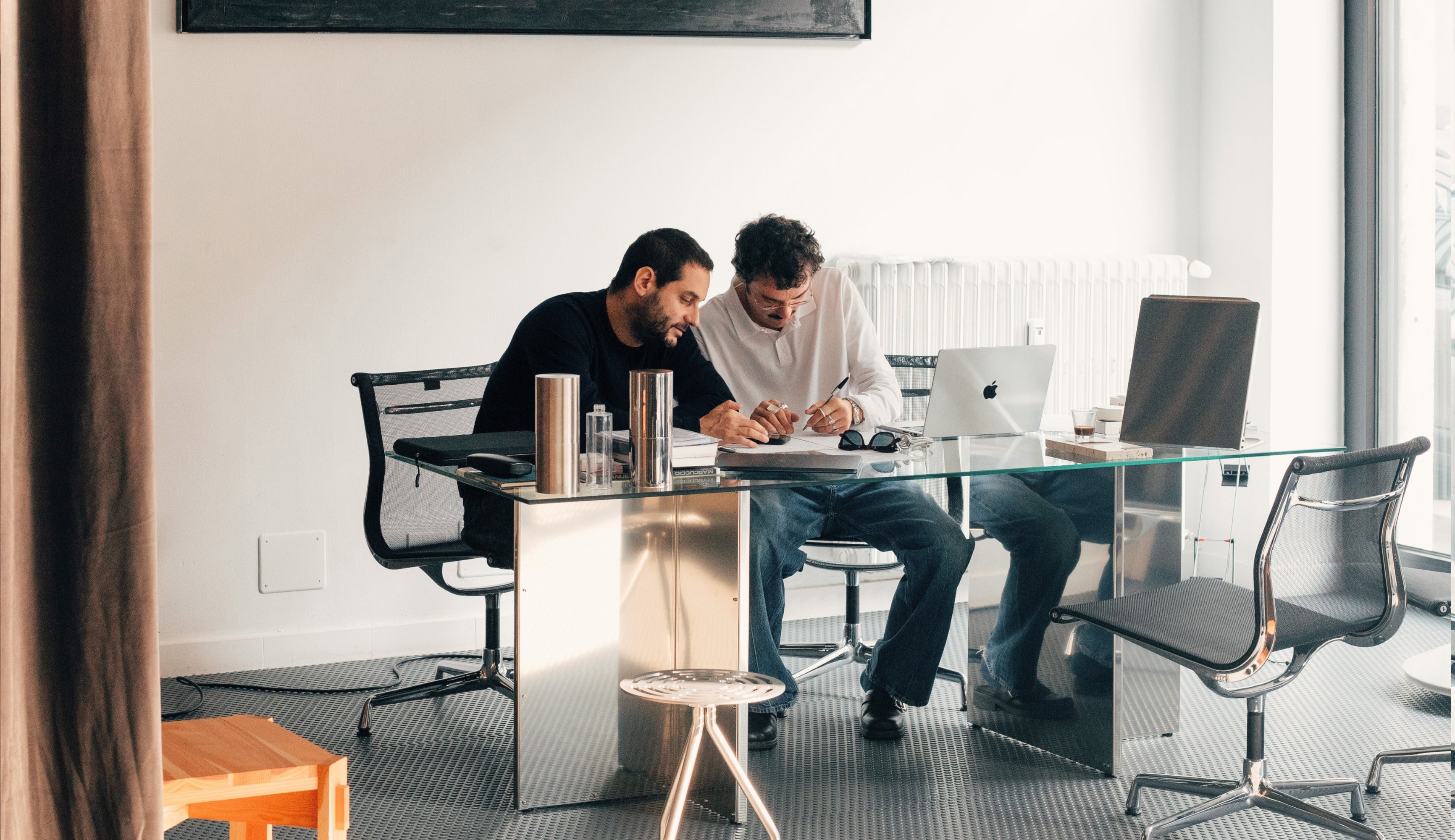
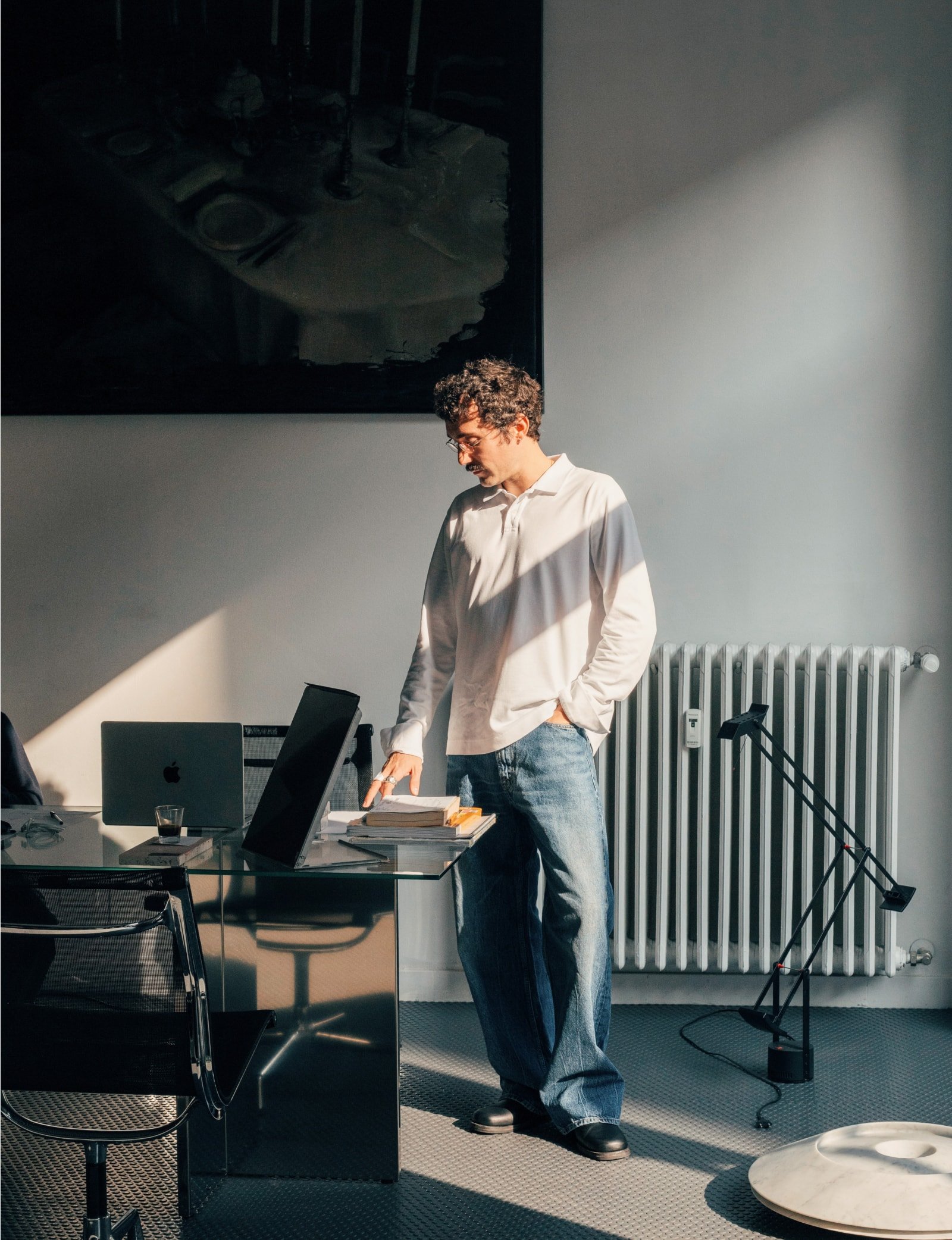
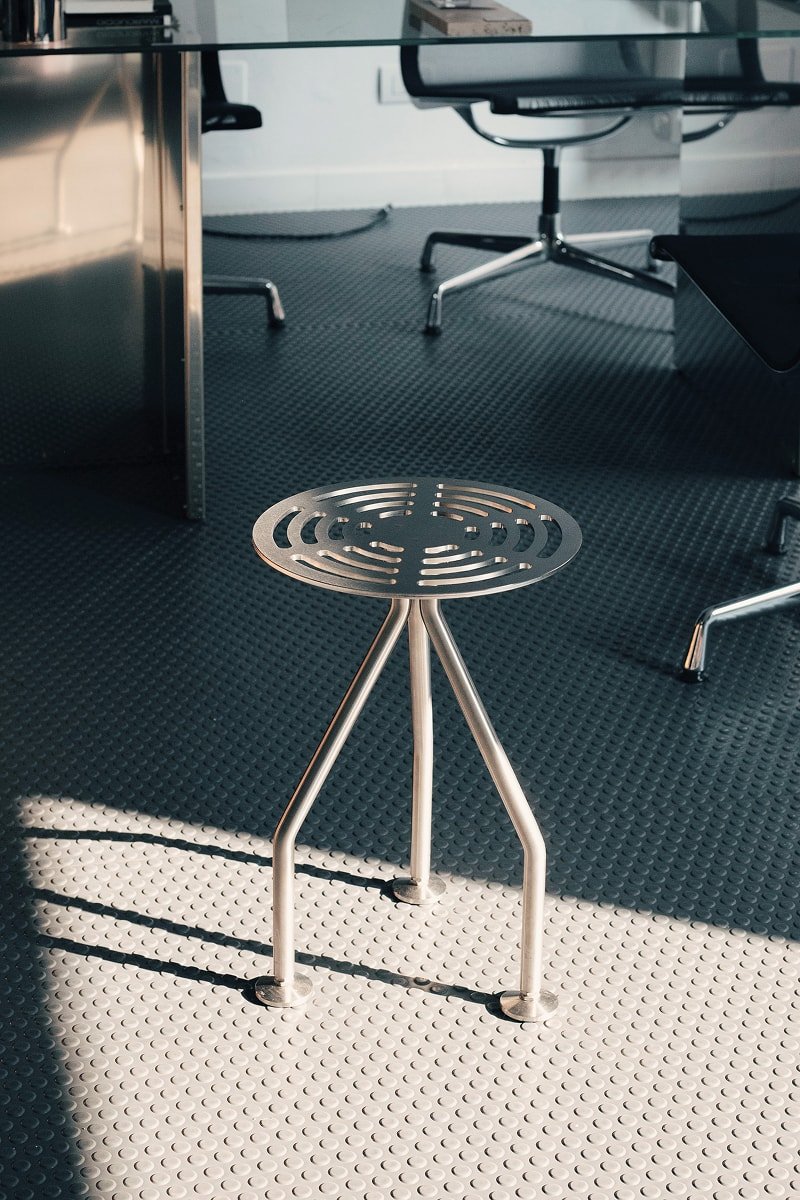
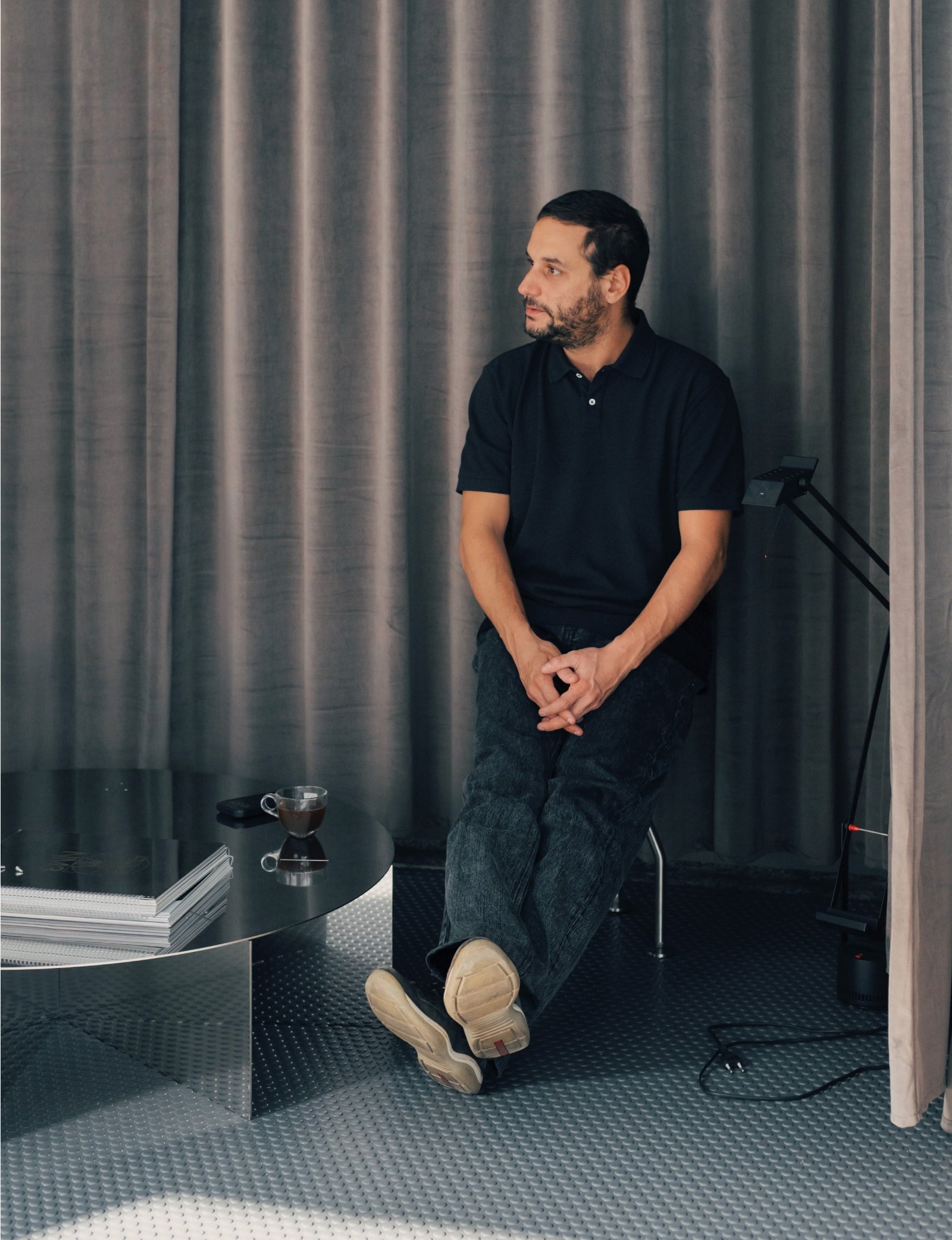
Working this way brings scalability but also limitations. The latter are taken as a creative challenge. Take a table of a certain size or with a certain number of seats. The manufacturing process can’t produce a circle bigger than 1.48m, so a round table is out of the question. But an infinitely long table? No problem. “That is that one,” Nicolò points across the room where some team members are working at a square metal desk. “You can simply attach to it; it could be one kilometer long.” No matter the piece, there’s a clear nod to the industrial production method. “We produce everything dry-joint and not welded. All these constraints are a consistent part of our design process,” Francesco concludes as he runs his fingers along the edge of the stool he’s sitting on.
“We believe in classic modernism, and we do believe that functionalism still has something to say within contemporary design discourse,” Nicolò explains as we’re seated on their designs, and elaborates, “It comes down to technology and form. Technology, we view as given, which is the way we interact with production. It has very, very strict rules, which we adhere to completely. And then form, because objects are forms in context. You need to give a shape to things and also to understand the proportion, which is not simple. It’s really the most difficult thing. Understanding what is the right dimension of things.”
Industrial Elegance
The resulting work is inherently elegant, something that’s been of utmost importance to them from day one. In the 2010s, “there was a period when everybody was making couches with pallets and exhibitions were often made out of OSB (Oriented Strand Board) and ship boards (often from plywood), exhibiting your poverty of means,” Nicolò reflects. “We didn’t like it. I mean, we were poor as fuck as well, but we tried to find a way to produce an exhibition design which was not poor-looking. Which has a kind of refined aesthetic, a bit more elegant in a way.” Through the partner of a friend, whose family runs a metal carpentry business outside Milan, they discovered the potential of metal sheets: locally available, cheap, flexible, durable, and sleek in expression. “It was a surprise,” he remembers. “Now it’s not that cheap anymore because a lot has changed in the last ten years, but at that time it was a surprise. We still have pieces from that exhibition.”
“At the moment, we were drawn to designing the infrastructure of these exhibitions. It was something that we used to do when we were students together in university,” Francesco recalls. “But then COVID arrived. There were no exhibitions to design anymore. And we started speculating about an old design from 2016 for an exhibition during design week. And we evolved that system into the very first three objects.” They put them on Instagram. “Jerry Lorenzo from Fear of God bought like six or eight of these stools, I don’t remember, for Dover Street Market in LA. And then somehow it started in a way. We still had an office that was a hybrid between my home and our office.”
Fast forward, and as a team of 14, they’re working across industries, for high-end brands from Milan to Shanghai. But there’s an unpretentiousness, a drive, and curiosity to the two – as they speak about their projects and approach. In Milan’s Isola neighborhood, the office now stretches across two floors, but it still carries a lived-in charm, revealing Francesco and Nicolò’s passions beyond design: the walls are clad with artist friends’ works, the wall in the basement is lined with wine bottles, and lunch is prepared by the two in the tiny kitchen in the back.
They complement each other: Nicolò is pragmatic, knows the technical details of the production process inside out. “He can build with his hands; he’s the one who hung this, of course,” Francesco recalls, pointing at a circular artwork attached by several metal pieces drilled into the wall, “I would have left it leaning on the wall like the other two.” Nicolò laughs, “It took me half a day, and I destroyed the wall, but I made it.” He adds, “What I admire about Francesco is his patience and his optimism. He’s great with people.”
“Modularity is about developing the grammar of a language.” – Francesco
The Blueprint: Grammar of a System
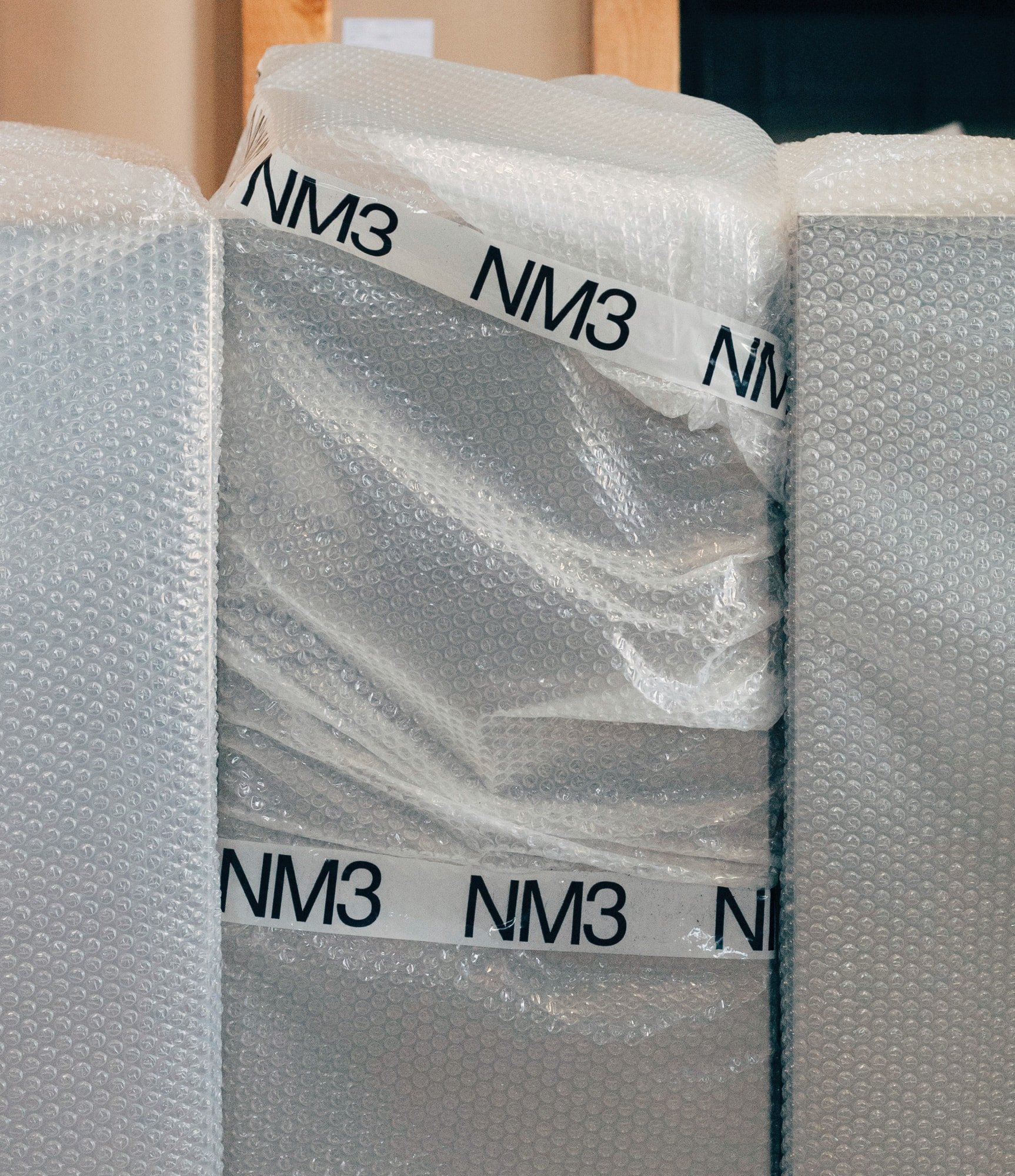
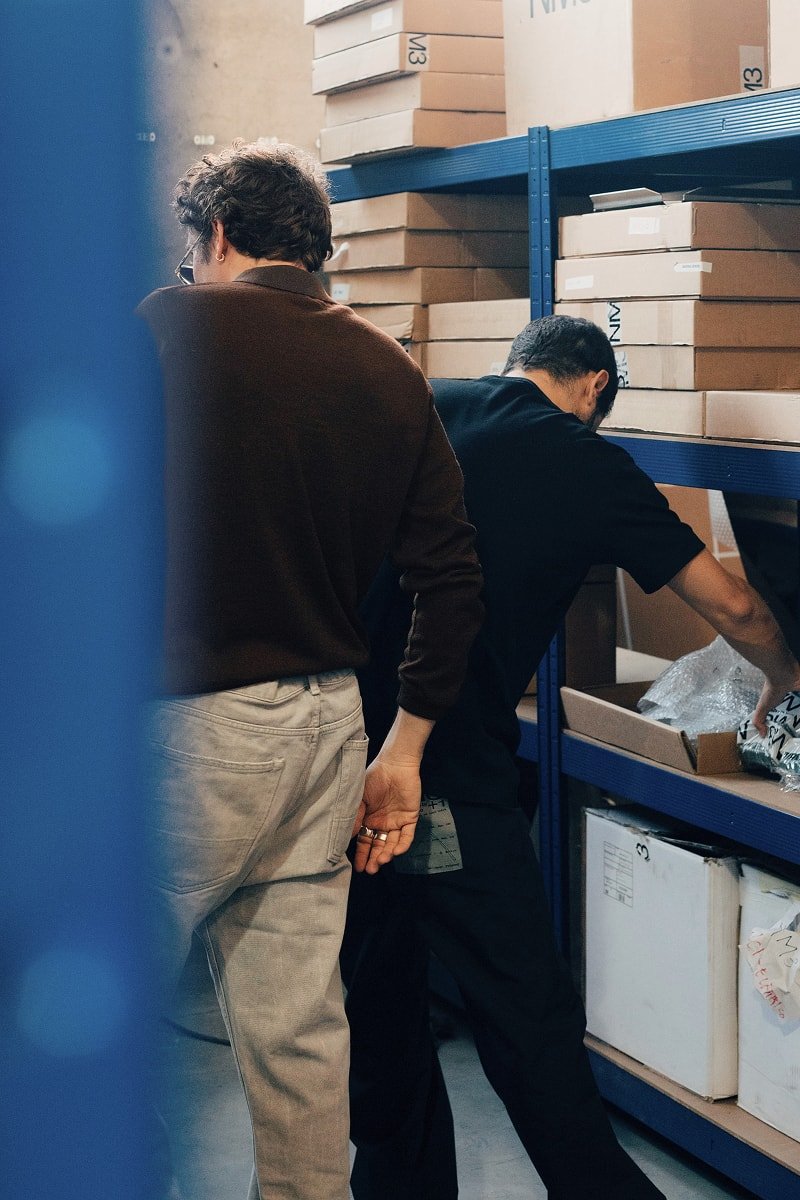
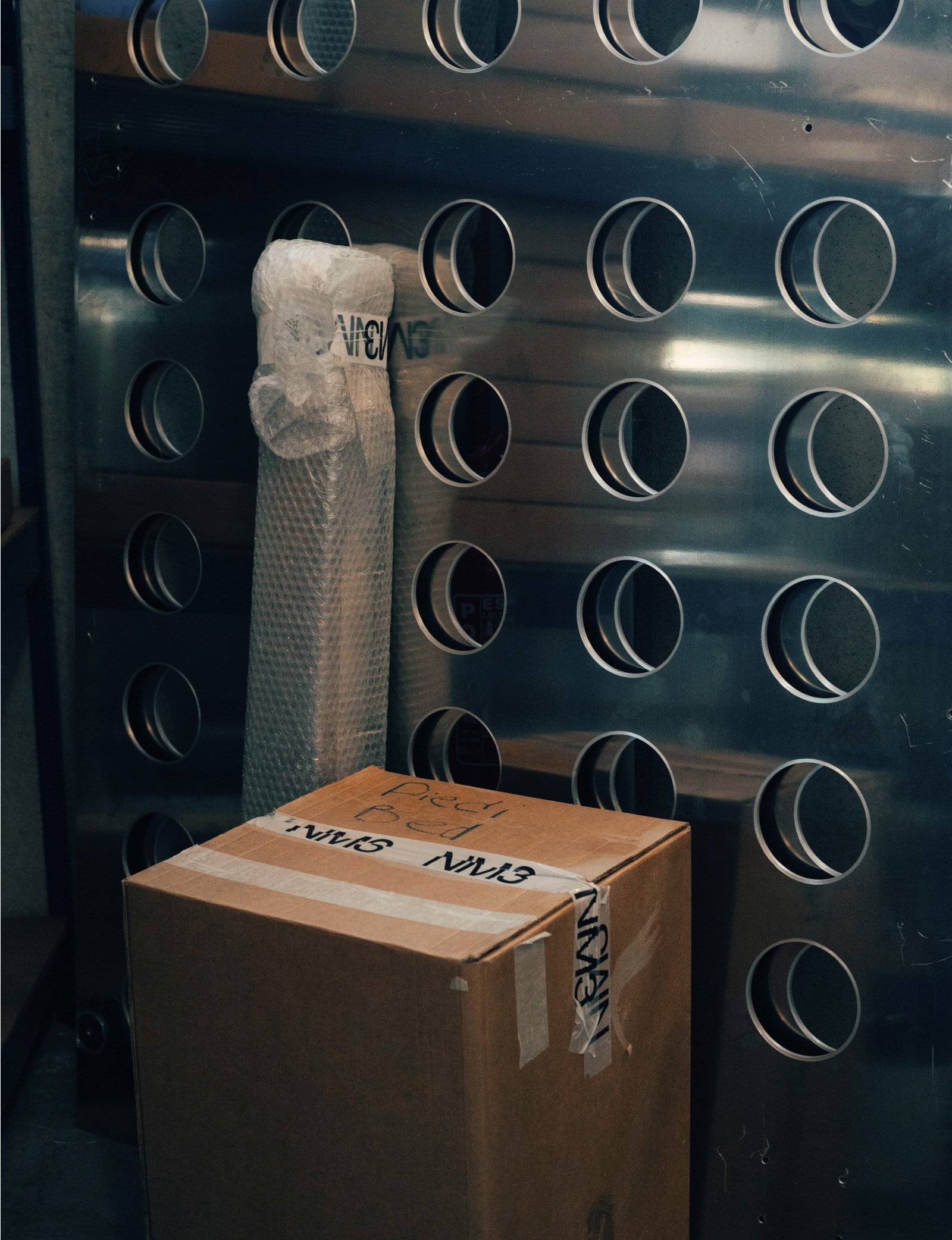
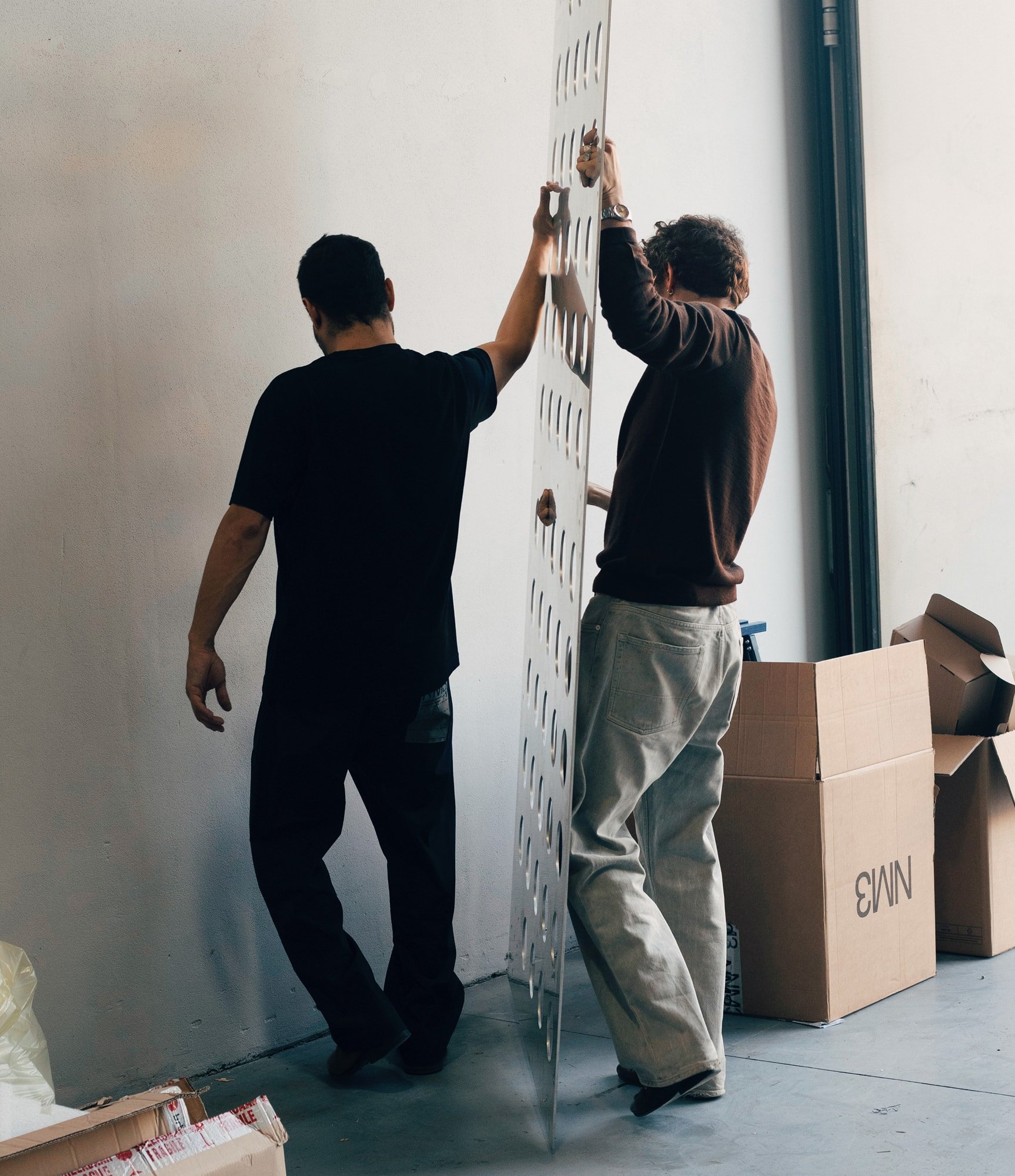
A short drive from the city, they just moved into their new warehouse and assembly site. This is where sheets in various sizes and finishes are assembled into everything from objects to furniture to exhibition components.
“We build everything with the very same language and the very same details. Always, always, always,” Francesco explains. “Whether it’s made in steel or metal, whatever metal, even if it’s the most specific and customized object, the clients need to understand that we always work with those details and within the given constraints.” He argues, “Because in terms of modularity, we developed a language. Modularity is about developing the grammar of a language. And then the way you put together the words and everything, it becomes a sentence, it becomes everything.”
That balance between standardization and customization is not easy to strike. NM3 addresses this challenge through a systems lens. “Our approach to design has always been systems-oriented rather than object-oriented,” Nicolò reflects.
The next chapter for NM3 is taking this one step further: “With NM3 Systems, we move into the world of system making.” Nicolò elaborates: “The focus will be on self-customization.” With NM3 Systems, a preview of which was unveiled at this year’s Salone del Mobile, predefined pieces can be combined into individual solutions. “We’re doing it for three categories of furniture: One is bookshelves. Then there are kitchens, and cabinets.”
NM3 Systems represents the distillation of their rule-bound ethos, of the idea to relate to design in an industrial way. Or as Francesco concludes, tracing the roots of the practice back to their early university projects: “Infrastructure is bound to specific rules, needed to build it and operate within it, whether that’s a highway or furniture.”
“Our approach to design has always been systems-oriented rather than object-oriented.” – Nicolò
Further Reading
Behind our Fall ‘26 shoot with Tadaima
In conversation with the founders Emma, Hanne, and Josefine Berzant
Curating Masseria Moroseta
Founder Carlo Lanzini explores, joined by Giorgia Eugenia Goggi, who helms the in-house Moroseta Kitchen, what it means to invite guests into your universe, the benefits of growing your own produce, and bridging tradition with new ways of thinking.